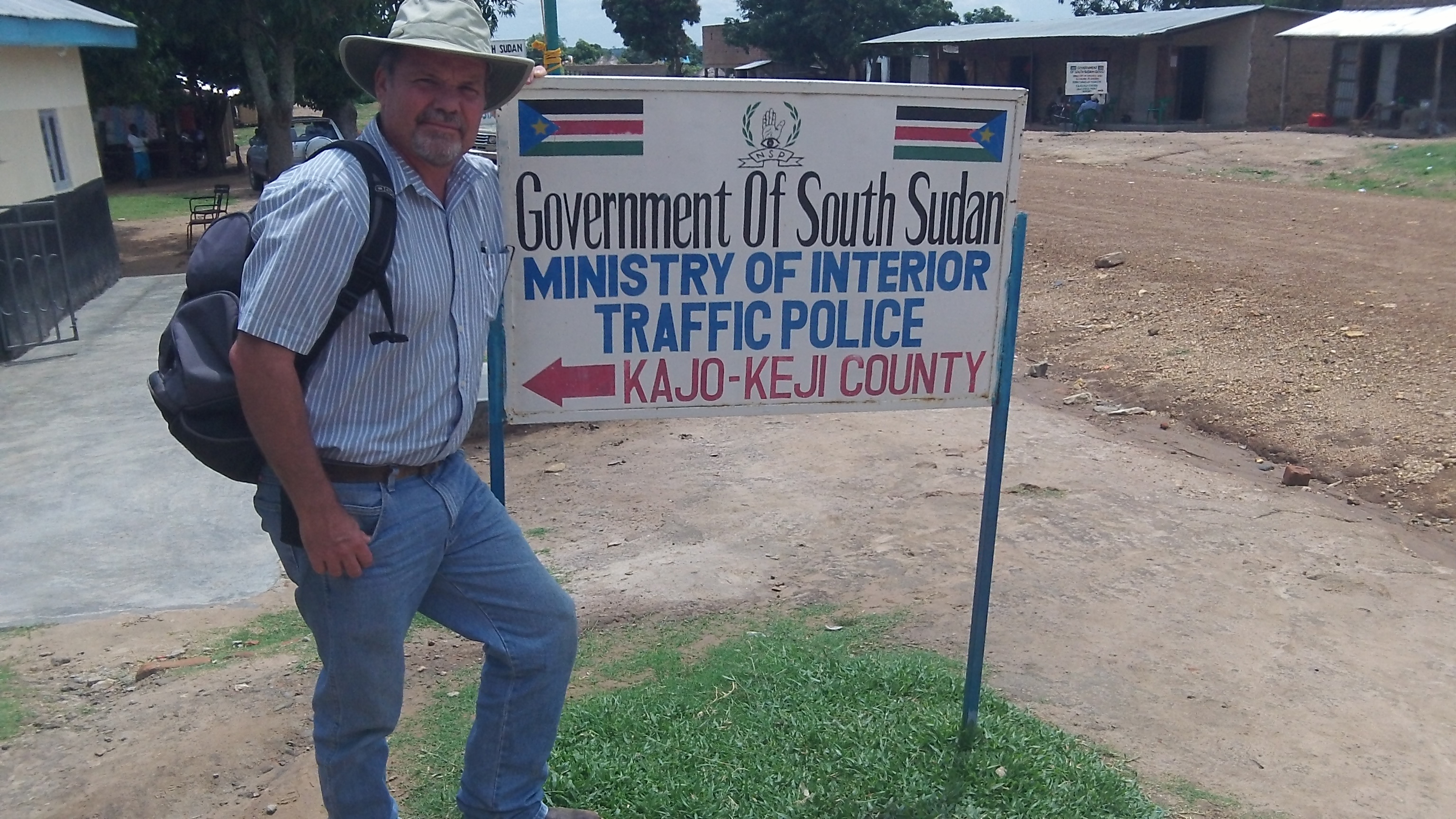
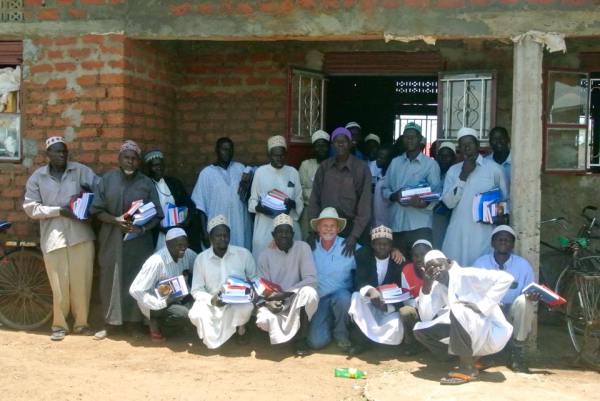
Please pray for RAU as we seek to walk out the Jesus Great Commission throughout North Uganda, South Sudan, Northeastern Democratic Republic of Congo and , Lord willing, even regions northward!
THANK YOU!!
Please pray for RAU as we seek to walk out the Jesus Great Commission throughout North Uganda, South Sudan, Northeastern Democratic Republic of Congo and , Lord willing, even regions northward!
THANK YOU!!
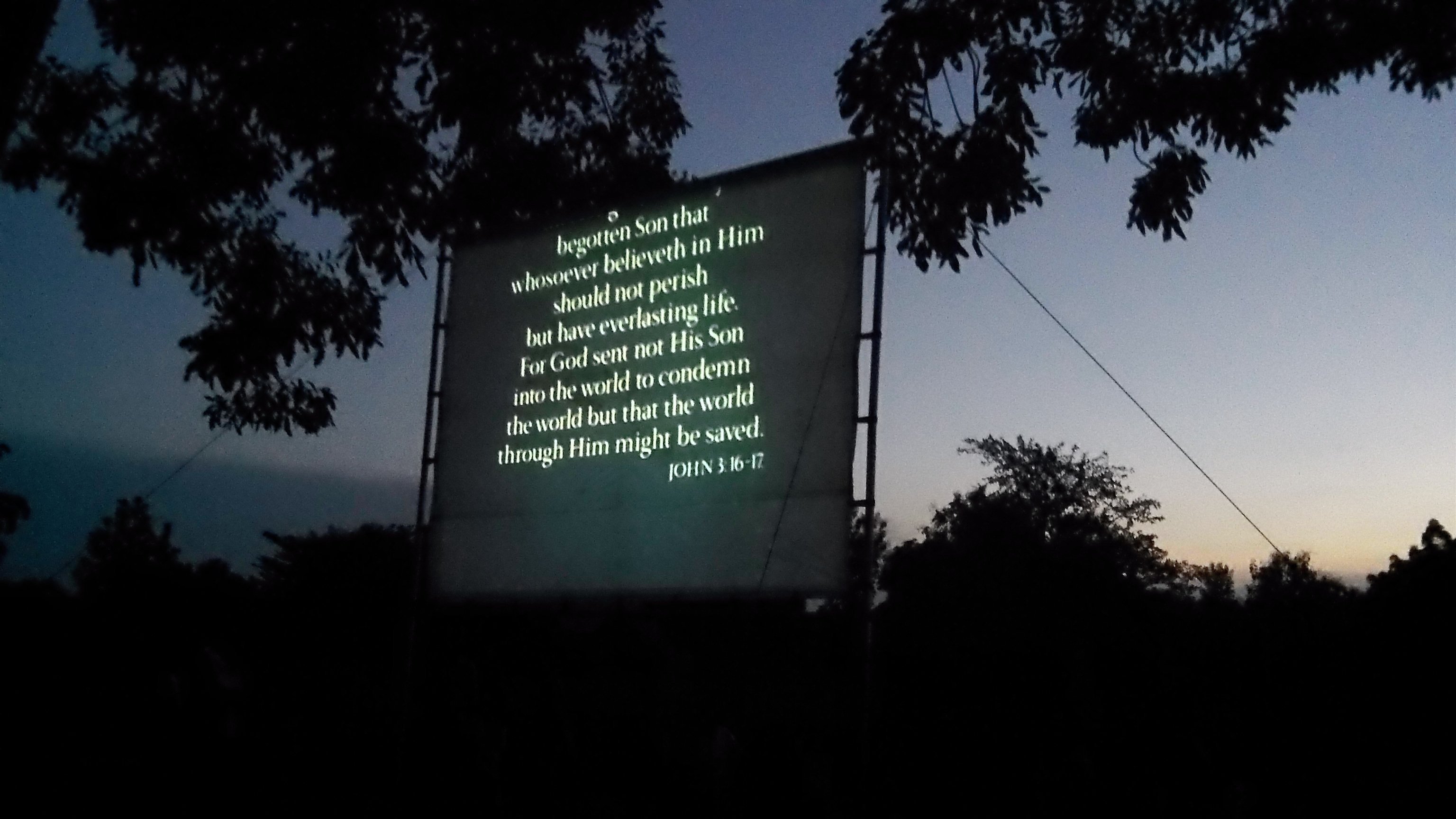
Actively being involved in Christ’s mission (John 20:21) is the best cure for materialism!
——————What is the antidote to materialism? Generosity. Easily sharing the things we have, and giving money and possessions away reminds us that they are temporal and God-given. It helps us hold them loosely and treasure Christ more than riches. Last week I posted on the dangers of materialism and this week I wanted to follow that up with another list from Randy Alcorn’s book on giving (Money, Possessions and Eternity). I’ll just give you a snippet of his paragraphs, if you want more you’ll have to find the book….
We need to hear this -not because the church needs more money, but because our hearts need more pruning. We don’t talk much about money, but it is one of the areas we most need to be challenged to better reflect Christ’s generosity and to cultivate a longing for heavenly treasure.
[ http://www.newhopeopc.org/blog/post/the-antidote-to-materialism ]
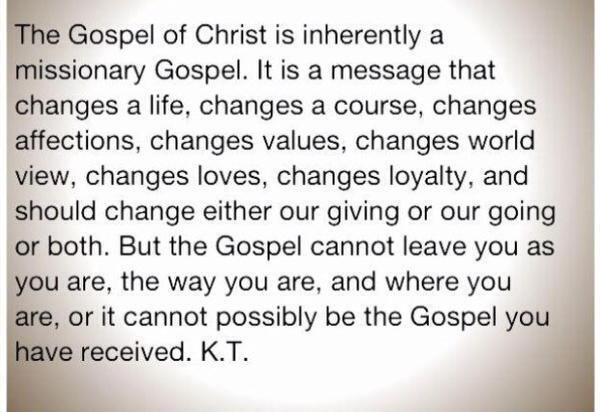
Below is a great exhortation on missions from Kevin Turner. May it sink deep into our hearts! Kevin is a dear friend and heads up Strategic World Impact (SWI). SWI works in areas where the Body of Christ is persecuted, the Gospel restricted, and areas where, due to hostile situations, the people face eternity each day.
When Jesus is supreme in our lives we cannot remain the same!
———————–
Note: Fact Checker is a new monthly series in which Glenn T. Stanton examines claims, myths, and misunderstandings frequently heard in evangelical circles.
Christians use lots of quotes. Pastors use them in their sermons constantly. Writers illustrate their points with them. Nothing wrong with that. They are quite helpful and encouraging in making a point.
Save when the quote has no basis in fact.
We as evangelicals who claim we are committed to truth are certainly good at spreading falsehood, even if unintentionally. We can do better.
 One very clever and popular quote we often knock around among ourselves is . . .
“Preach the Gospel at all times. Use words if necessary.”
It is always attributed to St. Francis of Assisi—founder of the Franciscan Order—and is intended to say that proclaiming the Gospel by example is more virtuous than actually proclaiming with voice. It is a quote that has often rankled me because it seems to create a useless dichotomy between speech and action. Besides, the spirit behind it can be a little arrogant, intimating that those who “practice the Gospel” are more faithful to the faith than those who preach it.
But here’s the fact: Our good Francis never said such a thing.
None of his disciples, early or later biographers have these words coming from his mouth. It doesn’t show up in any of his writings. Not even close really. The closest comes from his Rule of 1221, Chapter XII on how the Franciscans should practice their preaching:
No brother should preach contrary to the form and regulations of the holy Church nor unless he has been permitted by his minister . . . All the Friars . . . should preach by their deeds.
Essentially, make sure your deeds match your words. While there’s a nice and good sentiment in the statement—be sure you live out the grace and truth of the Gospel—the notion as it is typically presented is neither practical, nor faithful to the Gospel of Christ. It does not align with St. Francis’ own practice.
His first biographer, Thomas of Celeno, writing just three years after Francis’ death, quotes him instructing his co-workers in the Gospel thusly,
The preacher must first draw from secret prayers what he will later pour out in holy sermons; he must first grow hot within before he speaks words that are in themselves cold.
Mark Galli, senior managing editor at Christianity Today, wrote a wonderful little book on Francis as well as a clarifying brief article on the myth of this quote. He explains that Francis was quite a preacher, actually more along the lines of Jonathan Edwards or Billy Sunday than most of those who misquote him would like to think. Galli quotes Thomas’ biography,
His words were neither hollow nor ridiculous, but filled with the power of the Holy Spirit, penetrating the marrow of the heart, so that listeners were turned to great amazement.
Our man clearly spent a great deal of time using his words when he preached, “sometimes preaching in up to five villages a day, often outdoors. In the country, Francis often spoke from a bale of straw or a granary doorway. In town, he would climb on a box or up steps in a public building. He preached to . . . any who gathered to hear the strange but fiery little preacher from Assisi.” He was sometimes so animated and passionate in his delivery that “his feet moved as if he were dancing.”
Duane Liftin, president emeritus of Wheaton College, recently addressed the trouble with this preach/practice dichotomy in an important article. Of preaching the Gospel in deed, he explains,
It’s simply impossible to preach the Gospel without words. The Gospel is inherently verbal, and preaching the Gospel is inherently verbal behavior.
And the “deed” proclamation of the Gospel is not biblical either. Paul asks the Church at Rome (Romans 10:14):
How then will they call on Him in whom they have not believed? How will they believe in Him whom they have not heard? And how will they hear without a preacher?
So next time you hear one of your brothers or sisters in Christ use this quote to encourage or challenge you in your labors for our faith, gently guide them from the land of misinformation and make believe into truth.
Glenn T. Stanton is the director of family formation studies at Focus on the Family and the author of five books on various aspects of the family, including his two most recent, Secure Daughters Confident Sons, How Parents Guide Their Children into Authentic Masculinity and Femininity (Waterbrook, 2011), and The Ring Makes All the Difference: The Hidden Consequences of Cohabitation and the Strong Benefits of Marriage (Moody, 2011).
Missionary Mike Pettengill has written a great article on missions which has been posted at The Gospel Coalition International Outreached. This line in his essay particular stood out to me: “….If we were less focused on comfort in this life and more focused on the kingdom of God, our idol of safety would not infest our decision to serve….” May the Lord do a work in each of hearts so that we can pray in sincerity–
“Lord I am completely yours use me wherever you wish and in whatever way you so desire!”
by Mike Pettengill
“A quick search produces a dozen missions organizations advertising “safe” mission trips. But they cannot guarantee this promise, nor do they have the biblical authority to do so. While these organizations make promises they cannot keep, the apostle Paul was more honest with Christians when he said, “Indeed, all who desire to live a godly life in Christ Jesus will be persecuted” (2 Timothy 3:12). Suffering, an expected element in Christian living, should not be hidden from the faithful.

It is sad how in recent years the words sacrifice, martyr, and submission have become less popular and considered more extreme in evangelical churches. We teach believers today to avoid pain and suffering, even if it means avoiding Christian service. Hudson Taylor, the 19th century pioneer missionary, did not agree. Taylor said, “For our Master’s sake, may he make us willing to do or suffer all his will.” Jesus himself told us, “Blessed are you when others revile you and persecute you and utter all kinds of evil against you falsely on my account” (Matthew 5:11). In the next verse Christ said we should “rejoice and be glad” when we are persecuted. We were never promised a lack of pain or suffering, only the unwavering knowledge that the Creator of the Universe loves us.
To be clear, I’m not telling you to put yourself in harm’s way. Christians should not be foolish, dangerous, or cavalier. Missionaries are no exception; we should neither crave danger nor seek martyrdom. But never forget, this body we covet and try to protect was not intended for our use, but for God’s glory.
Our modern church culture seeks false safety at the cost of service to God. We are making an idol of our control at the expense of God’s sovereignty. If God is sovereign, and he controls all, there can be no tragedy or mistake, only the divinely orchestrated rolling out of his perfect will. If we were less focused on comfort in this life and more focused on the kingdom of God, our idol of safety would not infest our decision to serve. In John Piper’s Desiring God he tells us, “This is God’s universal purpose for all Christian suffering: more contentment in God and less satisfaction in the world.”
God created us, breathed life into us, and purposed us for his glory. The grace and mercy he gives warrants our love and obedience. Jesus Christ endured an inconceivable persecution and death to pay for our sins. In response, we boldly proclaim his greatness.
The Bible never says missions is safe. In Isaiah 40:9 we are instructed in a single verse to both “herald the good news” and “fear not.” Evangelism and suffering are again joined when Paul says, “As for you, always be sober-minded, endure suffering, do the work of an evangelist, fulfill your ministry” (2 Timothy 4:5). We are called to make a sacrifice in our lives to help spread the gospel around the world.
Truly submitting to the gospel of Jesus can only result in a heart turned towards saving the lost, feeding the hungry, and healing the sick. Charles Spurgeon, the 19th century British preacher, said, “A man is not far from the gates of heaven when he is fully submissive to the Lord’s will.” Sacrifice in the name of missions is not seeking martyrdom—it is submitting to whatever the Lord wills in our lives.
According to Martin Luther, “A religion that gives nothing, costs nothing, and suffers nothing, is worth nothing.” When we can acknowledge our perceived security is false and that safety is an illusion, we can begin to risk everything and accomplish great things for God’s glory.
If you can manage your own life, you have not sold out for Jesus. The life he wants for you is full of risk and peril and requires relying on him. “God, who foresaw your tribulation, has specially armed you to go through it,” said C. S. Lewis, “not without pain but without stain.” We must trust God’s sufficiency and serve him completely, no matter the cost.
Our life on this earth is only a blip in time. We do not seek false safety and fabricated security. Glorifying God should be our purpose. In the end of life on earth we hope to hear, “Well done, good and faithful servant. You have been faithful over a little; I will set you over much. Enter into the joy of your master” (Matthew 25:21).”
Mike Pettengill is a full-time missionary serving in La Ceiba, Honduras, with Mission to the World. Mike is a team leader of a 12-person mission team. To learn more about the Pettengill’s work in Honduras visit Pettengill Missionaries.
 Reaching Africa's Unreached