
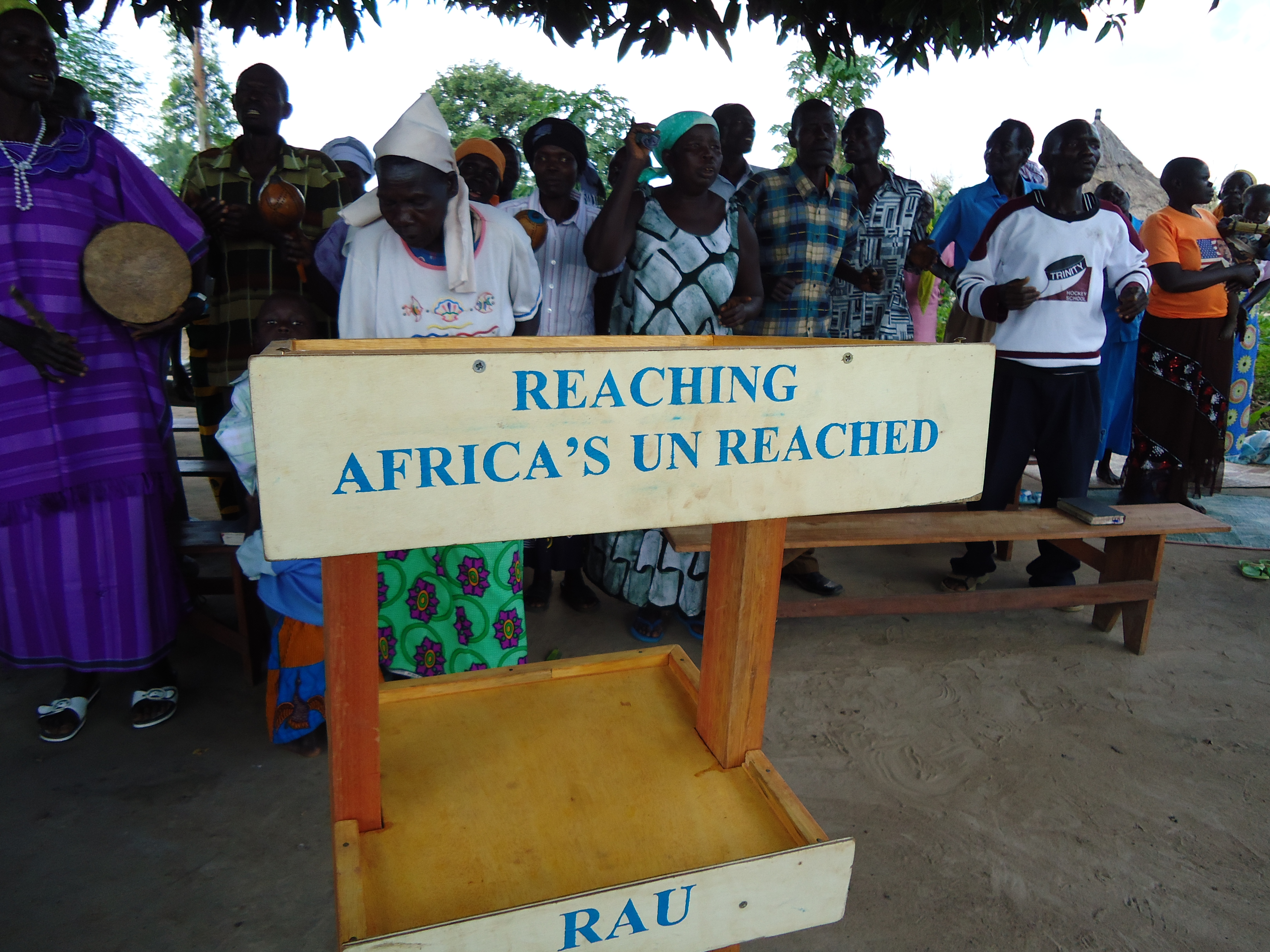
Our “Reaching Africa’s Unreached” land is located right in the middle of Joseph Kony’s old stomping ground on the Ugandan/South Sudan border. I have personally met many who lived through his 20+years of brutality in Northern Uganda and Southern Sudan. Kony ranks right up there with Hitler and Stalin. It is now thought that he is somewhere in Northeastern Democratic Republic of Congo (we minister there too) or Central Africa Republic. I do pray he is found soon and stopped.
I have mixed feelings about Invisible Children’s KONY 2012 video. I have read many stories and responses to the video. The two I have below have been the most helpful to me in understanding the context of Joseph Kony and the LRA.
The first story is by veteran African missionaries, Drs. Scott and Jenifer Myhre. Their insightful perspective reveals the wisdom of Christ.
The second story is by an actual Kony survivor. It is entitle: Kony 2012: A survivor’s perspective . This piece is very moving and shows how the love of Christ keeps one from bitterness and revenge.
May the Lord use both these stories for His glory and the strengthening of all His people so that their zeal is with knowledge (Romans 10:2)!
—-
“On Kony and viruses or how should we respond to “bad guys?” by Drs. Scott and Jenifer Myhre
A couple of days ago Scott and I watched the KONY 2012 video made by Invisible Children. I wasn’t entirely comfortable with the message and methods, but like millions of other people I shared it forward in fb as a thought-provoking piece that draws attention to African children. I only watched it once. In the last 48 hours this video has exploded across social media, and because we lived in Uganda for 17 years a few people have asked me what I think. So here goes some reflections on a sunny Friday morning in Kenya, far from those front lines (but close enough to many others that this won’t be a well-researched long-pondered post, but like all of them, simply personal immediate reflections from my heart).
First, what I LIKE about Invisible Children.
Eight million children die in the world every year. Four million of those deaths occur in Africa, invisibly to most of the rest of the world. The people with money and power and weapons and decisions are not often confronted with the most significant realities of our current time. So when talented passionate young people with resources pour their lives into making the invisible visible, that is a step towards change. We are a global community and the voices of the most vulnerable will not be heard, their faces will not be seen, unless someone with cameras and internet access and computers and the ability to write and speak in widely accessible languages, takes time and money to do so. When Jesus was walking around Palestine, he stopped to touch and listen to and heal very marginalized people, often to the dismay of his supporters.
The Lord’s Resistance Army has left a decade-long trail of abduction, murder, rape, arson, enslavement, war, and chaos in a swathe across central Africa. Read Aboke Girls (
http://www.amazon.com/Girls-Children-Abducted-Northern-Uganda/dp/9970022563) for a chilling first-hand account of their tactics in raiding a girls’ secondary school and capturing 139 13-16 year old girls for sexual slavery and use as child soldiers (109 were rescued when a lone Italian nun who was one of their teachers, and a Ugandan employee, tracked the raiders on foot and asked for the girls back). Or watch “War Dance” (
http://www.amazon.com/s/ref=nb_sb_noss?url=search-alias%3Dstripbooks&field-keywords=documentary+uganda+music+competition+&x=10&y=18), a well-done documentary about an LRA-affected community of children entering a music competition in Uganda. This is palpable, unadorned evil, flourishing in a vacuum of order and resources. Contrary to uninformed comments by an American political commentator recently, this is NOT a liberation movement fighting for Christian values. The beliefs and methods of the LRA are demonic.
The video interviews Luis Ocampo, the chief prosecutor of the International Criminal Court (who also has his hands full with corrupt politicians from Kenya who instigated post-election violence here a few years ago). There is a clear message that the leader of the LRA, Joseph Kony, should be brought to justice. This is a Biblical theme. Some people water down the message of Jesus. Peace and Love are strong words that can not exist in a messed-up world without Justice.
Invisible Children has brought this story to the world. And has used some of the resultant revenue for tangible good. My own daughter Julia slept in a dorm built by the Invisible Children organization at a school in Gulu when her Ugandan football team played in a national tournament there. She was the same age as most abductees. I was thankful for the solid walls and doors that kept her safe at night.
Now, what bothered me.
The video seems to be as much about the excitement of a popular movement as it is about the reality of war in Africa. There is some way that bracelets and posters and marches and kits kind of bother me, can’t quite put my finger on it, but by simplifying the problem and making the response a feel-good we’re-cool party, something is lost. This is most grating in the sequence with the cute blonde little American boy, son of the author, pointing to the picture of Kony as the “bad guy”. With a reference to Star Wars. I give the creative team some benefit of doubt, perhaps this helps a wider audience relate to the problem. But for me it was too cutesy, to trivializing. One “bad guy” is not the root cause of the problem. Kony only continues to survive, and perhaps thrive, because the issues he feeds on are broader and deeper.
1. Africans kill each other because they believe they have to for the survival of their own children. The Acoli people felt marginalized post-Amin (who was a northerner as well) when Museveni came to power. There were many small rebel movements who did not buy into the unifying post-Amin government. This is the root of the Rwandan genocide as well. And I suspect many of us would be willing to fight against a group (another tribe, etc) if we believed it was a choice between them or our kids.
2. Adults join rebel movements when they are desperate. You don’t find the well-off taking those risks. It’s easier to believe the “other” tribe is a danger to your survival when your survival hangs by a thread. Poverty and fear are the context for the LRA, and those are complex problems that require life-long investment. Perhaps life-ending investment. Jesus defeated evil by laying down his life. Christians today can not defeat evil by pushing a share button or attending a fundraiser. Those are good things, but at some level a bigger sacrifice is required. To build schools and bring clean water, to protect the widow and orphan, to care for the environment creatively so that food and fuel are adequate to sustain life, to embody the love of Jesus in a way that the poor can hear and see and touch and be transformed. I know this sounds hard, and I don’t mean it to sound self-righteous. We struggle with this issues, with our natural tendency to walk across the road and ignore the beat-up man on the ground. I hope the excitement and awareness of this generation will propel hundreds and thousands to turn away from a life devoted to comfort and enter into the hard and dangerous work of teaching and healing and preaching. It won’t be easy, or quick. Real solutions rarely are.
3. Children join rebel movements against their will, but then they stay. Because they’ve been traumatically psychologically injured and enslaved in a way that is powerful and binding. They are targeted because this is only possible with humans who are at critical formative stages of development. Removing Kony from his position of leadership is a good thing. But there are tens of thousands of children who are now in their teens and 20’s, who need reconciliation with their communities. Who need land and jobs and homes and an alternate way of life. This requires counselors, teachers, medical people, artists, parental influences, pastors.
4. The “big man” is part of African culture in a way that Americans perhaps do not appreciate. We Americans are egalitarian. Anyone can do anything. Africans have more respect for elders, and leaders. Putting one man’s name on campaign-like posters all over the world could backfire. People could respect him as someone able to evade international capture. People could come to believe in his spiritual powers even more firmly. His status and ability to inspire fear could grow. Africans who resent western interference could actually begin to protect him.
5. The LRA is not the biggest problem that African children face. Poor care for pregnant women, unsafe deliveries. Preventable infections. Malaria. HIV-AIDS. Malnutrition. Abysmal schooling. These are killing 3,990,000 of the 4 million. Again the solutions here can not be condensed into a bright red one-word poster. But as long as this video is circulating and generating discussion, let us think about the invisible majority who are taken by the chronic background of high mortality. I watched two babies die this week directly related to the health care strike in Kenya. Corruption on the part of politicians, and self-promoting desperation on the part of health care workers. I just got off the phone following up the rape of several young girls in our community. Cover-up on the part of parents, and police. There are forces of evil at work here, bigger than Kony. Some reports say that the LRA has dwindled to about 250 combatants. Those are valuable lives that deserve justice and rescue, but let’s pour ourselves into bigger problems too.
Perhaps oversimplification is inevitable in a culture raised on the one-minute sound bite. Our attention spans are limited. Few people are probably still reading this far into this post. If you really want to get the full picture, here is a link to a blog that links further on to dozens of articles and resources:
http://rachelheldevans.com/invisible-children-kony-2012-resourcesMy problem with the critics, too.
It’s always easy to find something to criticize when 32 million people jump on a bandwagon. I won’t say much here, but there is one issue I can’t ignore. Many of the critical comments imply that the UPDF, the Ugandan army, is just as bad the LRA. Having been personally rescued from rebels by the UPDF, I have to say this is not a fair comparison. They have done some bad things, as has the American military. But as African armies go, I would rather meet the UPDF in a remote jungle than any other I can think of. Ugandan political decisions have taken a bad turn in the last couple of years in suppressing dissent. And whenever you have young men with guns some bad things will happen. But the UPDF is a force of stability, working in harsh conditions, with minimal resources. They are in no way comparable to the LRA which only exists to prey upon innocent civilians. That said, supporting the UPDF has little impact on Kony now. They must stay vigilant, but in reality Kony has fled far from even the border of Uganda for many years now. It is really an African Union issue.
Parting comments.
My hour to post is almost up. So I want to end with two bigger picture comments about viruses and Kony. First, while the video has gone “viral”, one could say that Kony himself is like a virus. A harmful, infective particle that has to commandeer the resources of healthy cells to exist and propagate. But as Solzhenitsyn wrote, the line between good and evil runs through every human heart. Kony’s heart, and mine. Do I believe this man is redeemable? Am I? Well, is there any evil too great for God to forgive? Kony is a human being, not a virus. As are his victims. We can learn from our brothers and sisters in Rwanda and South Africa, and from those who are attempting peace and reconciliation in Northern Uganda, and South Sudan. Africans lead the world in forgiveness. The success of rebuilding Rwanda came from a military intervention to stop the genocide and establish safety (a local military, after the failure of the international peacekeepers). Then a public, organized, system of trial for bringing the leaders to justice. And then a community-level system for re-assimilating the perpetrators, for telling the truth, for acts of forgiveness. Africans know how to do this in ways that are amazing and humbling, and we shouldn’t get in the way.
Second, Jesus and politics do mix, just not in the way most think. Jesus was a politically challenging figure. It is good for Christians to think about and involve themselves in issues like war and international courts and school buildings and media. But we shouldn’t confuse our American ideals with Christian truths. Sometimes they are parallel, but often they are not. Even as Jesus lived on earth, much of what he said was politically shocking and confusing to his followers and detractors alike. Here is the reading from NT Wright today, in Lent for Everyone (Friday, week 2):
But what is the real battle? For Jesus, it wasn’t the battle they all expected him to fight — with the occupying Roman troops, or with Herod and his supporters, or perhaps even with the Sadducees and their would-be aristocratic clique in charge of Jerusalem and the Temple. Jesus’ followers probably thought he would fight one or all of them. Having watched as he did many other remarkable things, it was quite easy for them to believe that he could fight a supernatural battle against these natural enemies. Jesus himself spoke, later on, of being able to call several legions of angels to his help. But on that occasion he refused; because that was the wrong sort of battle to be fighting. In fact, as gradually becomes clear, the real battle is against violence itself, against the normal human wickedness that shows itself in the desire for brute force to win the day. If you fight fire with fire, fire still wins. And Jesus has come to win the victory over fire itself, over the rule of the bullies and the power-brokers, in favour of the poor, the meek, the mourners, the pure in heart. It is precisely because Jesus is right in the middle of the real battle that it is vital not to confuse it with other battles. The real battle, then, is against the real enemy, who is not the flesh-and-blood enemy of foreign soldiers, or even renegade Israelites. (When the Romans crushed the Jewish rebellion in ad 66—70, more Jews were killed by other Jews, in bitter factional fighting, than were killed by the Romans themselves — and they killed quite a lot.) The real enemy is the power of darkness, the insidious, sub-personal force of death, deceit and destruction that goes in scripture by the name of ‘the Satan’, which means ‘the accuser’. It goes by other names, too; a familiar one was ‘Beelzebub’, which means literally ‘Lord of the flies’.
Let us follow in His steps, into harm’s way, to spotlight injustice, to walk alongside the suffering, to lend whatever gifts God has blessed us with to bless others. And let us remember that our real enemy is not Kony, but the spiritual forces of evil in the heavenly realms, the forces that will only be overcome by prayer and service, by the blood of Jesus and the living word and testimony of His followers who do not love their lives unto death (Rev. 12:11).
——–
 Security along the loosely demarcated border has been a concern
 Horror of deadly cattle vendetta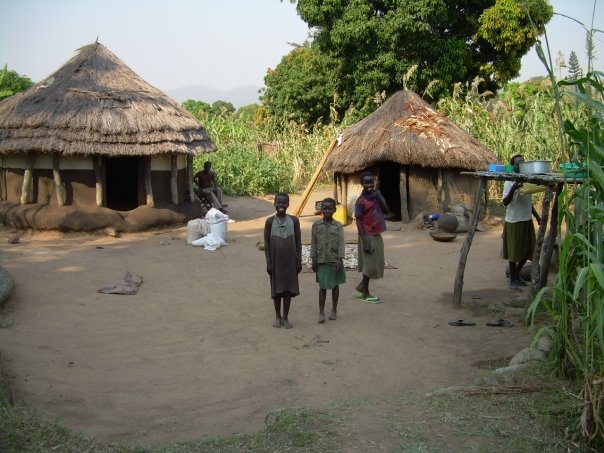

 Reaching Africa's Unreached