Travailing for Souls!!

May each of us have an all consuming zeal to see lost men and women saved!

A special thank you to Ray Ortlund for posting this on his blog!

Travailing for souls

As soon as Zion was in labor
she brought forth her children.  Isaiah 66:8

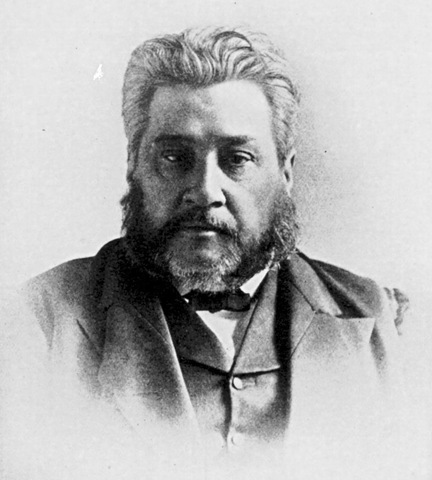
“If any minister can be satisfied without conversions, he shall have no conversions.  God will not force usefulness on any man.  It is only when our heart breaks to see men saved, that we shall be likely to see sinners’ hearts broken.  The secret of success lies in all-consuming zeal, all-subduing travail for souls.  Read the sermons of Wesley and of Whitfield, and what is there in them?  It is no severe criticism to say that they are scarcely worthy to have survived.  And yet those sermons wrought marvels. . . .

In order to understand such preaching, you need to see and hear the man, you want his tearful eye, his glowing countenance, his pleading tone, his bursting heart.  I have heard of a great preacher who objected to having his sermons printed, ‘Because,’ said he, ‘you cannot print me.’  That observation is very much to the point.  A soul-winner throws himself into what he says.  As I have sometimes said, we must ram ourselves into our cannons, we must fire ourselves at our hearers, and when we do this, then, by God’s grace, their hearts are often carried by storm.”

C. H. Spurgeon, “Travailing for Souls,” 3 September 1871.  Italics original.

 The statement above and the statement below are perfect mates. May we believe for souls  in the same manner George Mueller did. Thank you for this post Michael Acidri!

Spurgeon on George Muller…

“When I was conversing lately with our dear friend, George Muller, he frequently astonished me with the way in which he mentioned that he had for so many months and years asked for such and such a mercy, and praised the Lord for it, as though he actually obtained it. Even in praying for the conversion of a person, as soon as he had begun to intercede, he began also to praise God for the conversion of that person. I think he told us he had in one instance he had already prayed for thirty years and the work was not yet done, yet all the while he had gone on thanking God, because he knew the prayer would be answered.”-C.H. Spurgeon

Medical Charity loses contact with staff in South Sudan…pray!

Update from BBC Africa (January 13th)–the violence continues in South Sudan…please keep praying!

South Sudan clashes: Murles exact revenge in Jonglei.

“Some 57 people, mostly women and children, have been killed in a revenge attack in South Sudan, officials say….”

South Sudanese who fled the recent ethnic violence listen as a woman describes the attacks, in Gumuruk, Jonglei State, January 12, 2012 The UN has launched a “massive” operation to help those affected by the clashes
—————————————–
Update from BBC Africa (January 5th)-Please continue in your intercessions!

Jonglei clashes: South Sudan declares a disaster

South Sudan has declared a disaster in Jonglei state, where some 100,000 people have fled recent clashes between rival ethnic groups.

—————–

Update from BBC Africa (January 3rd)–Please keep praying!

South Sudanese ‘massacred’ after fleeing Pibor

Armed Lou Nuer men in Likwangale listen to South Sudan's Vice-President Riek Machar - 28 December 2011. Photo from Sudan Tribune

Scores of people have been slaughtered after fleeing attacks by fighters from a rival ethnic group in South Sudan, according to numerous reports.
——————————

A medical charity in South Sudan has lost contact with over a hundred of their staff!  Please pray for this medical charity and for peace in this newest country of the world. Please pray for our work there as well…thank you!

From BBC Africa: MSF fears for South Sudan staff caught in Pibor violence

Armed Lou Nuer men in Likwangale listen to South Sudan's Vice-President Riek Machar - 28 December 2011. Photo from Sudan Tribune South Sudan is still flooded with weapons after the end of the decades-long war with northern Sudan
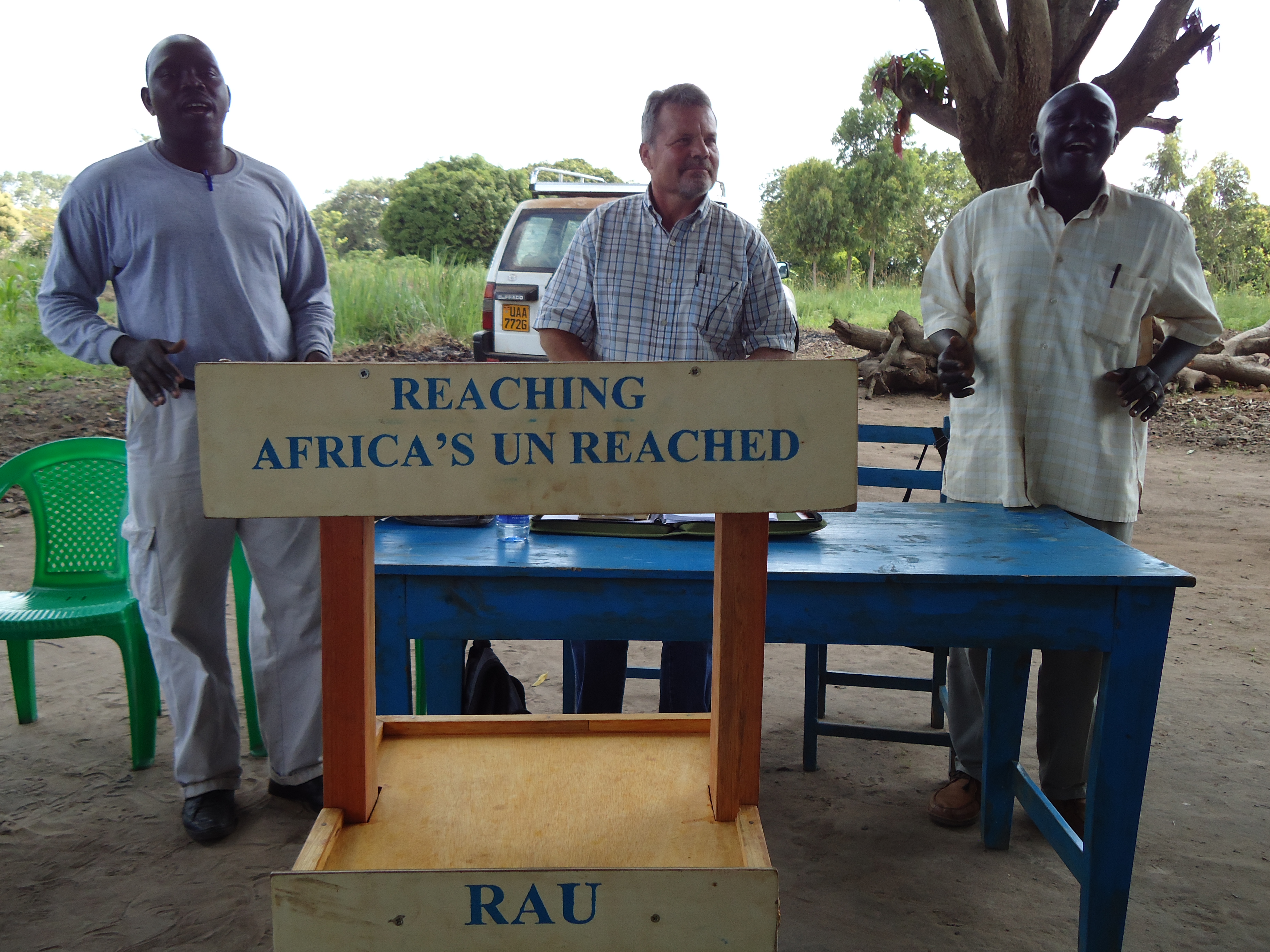
Medical charity MSF says it is “extremely worried” after losing contact with some 130 staff in the town of Pibor in South Sudan.

An MSF spokesman said he believed they had fled into the bush after fighters from the Lou Nuer ethnic group attacked the town, home to the Murle group.

A hospital was reportedly set alight.

UN troops and the South Sudanese army were unable to prevent the attack, which follows a wave of violence linked to cattle rustling.

MSF spokesman Parthesarathy Rajendran told the BBC they had only been able to get in touch with 13 members of staff, and believe the rest fled into the bush to escape the attack.

He urged both sides in the conflict to respect MSF facilities because the charity was the only health-care provider in the area.

Almost all the residents of Pibor had also already fled amid fears of an impending assault.

The UN had deployed more combat troops to defend the town following reports that the armed Lou Nuer men were approaching.

However, the 800 soldiers who were said to be present in the Pibor were completely outnumbered by the attackers.

The number of casualties is not yet known.

Power struggles

Fighters from the Lou Nuer ethnic group have been marching through Jonglei state in recent weeks setting fire to homes and seizing livestock.

The entire town of Lukangol was burnt to the ground last week. About 20,000 civilians managed to flee before the attack, but dozens were killed on both sides.

BBC map showing South Sudan and Jonglei state

About 1,000 people have been killed in Jonglei in recent months, during inter-ethnic fighting, triggered by the cattle raids.

The governor of Jonglei state and the vice-president of South Sudan have been trying to mediate between the rival ethnic groups.

The BBC East Africa Correspondent, Will Ross, says the Lou Nuer and Murle communities are now basically at war with each other.

It is not clear what can be done to ensure that there is not massive loss of life, he says.

Tribal violence over cattle rustling has been going on for years in the region, but reprisal attacks are now at an alarming level, our correspondent adds.

South Sudan became independent on 9 July 2011 following decades of civil war with the north.

One legacy of the conflict is that the region is still flooded with weapons.

These are now being used in tribal power-struggles, which often focus on cattle because of the central role they play in many South Sudanese communities.

So far, the South Sudanese authorities appear unable to make any progress in tackling the problem.

Related Stories

Go and Tell!

In the Old Testament people were urged to come and see  what God was doing in and for the people of Israel. Now as we look back to the death, the resurrection, the ascension of Jesus and the giving of the Spirit we are urged/commanded to go and tell !

GO!
Go and Tell!

Jesus is My King…Do you know Him?

Jesus is our King! As His ambassadors we proclaim His Lordship and seek to spread His fame to all nations, peoples, tongues and tribes!  His great love compels us. His mercy and grace fills our hearts and lips with praise and worship! His faithfulness assures us. His promises are always kept and comfort us through all the trials of life! His power is ultimate! In His presence we find fullness of joy in Him and want all to know Him!

Listen to this YouTube Clip and be inspired!  —Jesus Is My King—Do You Know Him?—

Jesus is the King of kings and is worthy of all worship and adoration!!


“Malaria is the main killer here in Congo, especially for pregnant women and children…”

Lord, please use us to help the Congolese in their battle with malaria as we proclaim the gospel there!

Malaria: Eastern DR Congo’s other battle

Distribution of malaria nets in eastern DR Congo Congolese women demanding life-saving mosquito nets

On a muddy back street on the outskirts of Goma, in the eastern Democratic Republic of Congo, more than 100 women are laying siege – with cheerful determination – to the rickety gates of a small clinic where aid workers are handing out free items.

It is a familiar scene in a region still rated one of the poorest, and most dangerous, in the world.

But instead of the more familiar search for food, shelter or medicine, the women here – many displaced from their homes by years of conflict – are after nets: cheap, simple, insecticide-soaked, life-saving, mosquito bed nets.

“Malaria is the main killer here in Congo, especially for pregnant women and children,” says Dr Vincker Lushombo, from Save the Children, watching as each woman’s details are recorded, and a net handed over with brief instructions.

“But in one badly affected area here, we distributed 10,000 nets and saw malaria rates drop by over a third.”

That is just the start of it. Mosquito nets are all the rage in Africa – and with good reason.

A South Sudanese mother cradles her daughter, who is sick with malaria in November 2011 Malaria deaths in some countries have been cut by half

In the past few years, the continent has been draped with tens of millions of bed nets, as a faltering, half-hearted campaign against malaria is transformed into an invigorated, celebrity-endorsed, global campaign to try to eradicate the disease by 2015.

In some countries the results have been spectacular, with malaria deaths cut by more than a half.

Campaigns like this, and huge distributions from partnerships like the Global Fund have led to 50% of households in sub-Saharan Africa having at least one net. This figure was released this month by the World Health Organisation’s annual Malaria Report.

There is good news here. The same report gives encouraging figures – testing for malaria has nearly doubled across sub-Saharan Africa, which means people can be treated faster.

The challenges around the corner are familiar, though – lack of aid from donor countries means the fight against malaria loses a quarter of its funding.

The WHO is asking the Bric countries [Brazil, Russia, India and China] and the US to do more.

But there is also some less encouraging news.

In the green hills around Goma, the net campaign is struggling – despite the odd success story – with no indication yet that overall malaria rates are falling. Some health experts privately warn that the overriding focus on nets is in danger of becoming “an obsession which distracts from the need to address the root causes” of the disease.

Fishing nets

DR Congo is a hard place to help. Its landscape is heavily forested and stagnant pools form easily after the heavy rains.

There are 12 of us in the house. And we only have one net between us”

Mapendu Mwamini Goma slum dweller

There is little drainage and little access to heavy machinery to create channels to drain off rainwater. Roads are poor and so access to outlying areas difficult.

Two decades of conflict and chaos have destroyed key infrastructure and left many families in the east living in makeshift camps, often exposed to malarial swamps.

“It’s a struggle,” says Corry Kik, who has almost two decades of experience in the region with Medecins Sans Frontieres (MSF).

The nets often end up being resold or “used for other purposes, like fishing. It’s hard for people to change their behaviour. It’s about education”.

She also told us that many families will spend what little “spare” money they have on other goods like a mobile phone, rather than a bed net.

More than half the people treated by MSF here have malaria.

“We need to be more aggressive in targeting prevention, spraying houses” – with insecticide and draining waterlogged areas where the mosquito breed, says Ms Kik.

Nets, she believes are not “the only answer. They are part of the answer”, but she feels there is “sometimes” too much focus on them.

Back in Goma’s slums, 25-year-old Mapendu Mwamini has just collected her free bed net from the clinic, and is now tying it to the wood and cardboard walls of her small bedroom.

She fled to the town in 2007 to avoid fighting in the countryside.

Today is the first time she has ever used a net. Over the years, she and her husband have struggled to pay for medical treatment for the family.

“We’ve all had malaria,” she says.

Two years ago, her five-month-old baby died from the disease.

“I know I must use the net to save my other children,” she says.

But she has 10 children in all.

“There are 12 of us in the house. And we only have one net between us.”