Crawling Through The 10/40 Window

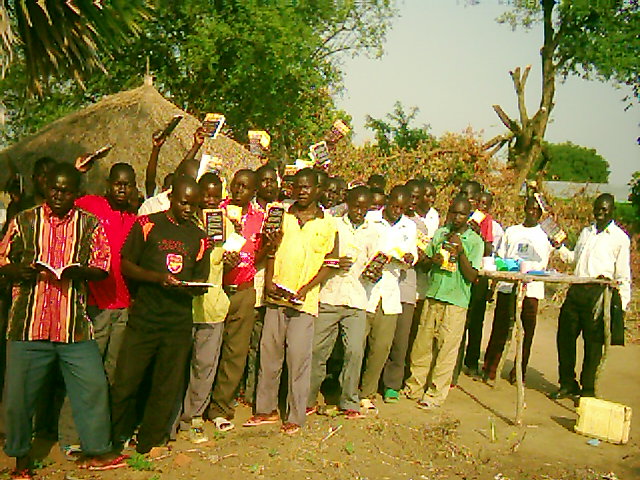
I found this post at the Gospel Coalition by Mike Pettengill– very thoughtful.  R.A. U. is located in the extreme northwestern part of  Uganda and will be primarily training and equipping pastors with godly resources ( like the ESV Global Study Bible) from three countries,Uganda, South Sudan, the Democratic Republic of Congo. Our model comes from 2 Timothy 2:2. Our strategic location places us advantageously to be a part of sending brethren to the unreached in North Africa.

Pettengill’s exhortation is a timely and pertinent one for the church in the West!

“…Let’s give the churches in the Global South the training, resources, and financing they need to reach the 10/40 Window. Churches in the United States and churches in the Global South can partner together to evangelize the billions of lost souls in regions that need to be evangelized with ferocity….”

R.A.U. is privileged to be a part of God’s action plan to do this!

——————————-

Crawling Through The 10/40 Window

By Mike Pettengill

For more than two decades, much of the Christian world has been turning its gaze toward the 10/40 Window. Increasingly the North American evangelical church, the richest church in the history of the world, has been redirecting its missionaries and other missions resources toward the darkness within the this area of the globe. The goals are highly commendable, but are these methods prudent?

Argentine-born evangelist Luis Bush coined the phrase “10/40 Window” in 1989. The Joshua Project currently defines the 10/40 Window as those 69 countries that sit between 10 and 40 degrees north latitude in North Africa, the Middle East, and Asia. This is the heart of Islam, Hinduism, and Buddhism. It has been estimated that 90 percent of the 4.4 billion people living in the 10/40 Window are unevangelized; yet only 10 percent of our global missionary force serves there.

Why Not the West

According to the Center for the Study of Global Christianity, in 2010 the U.S. sent out 127,000 of the world’s estimated 400,000 missionaries. It is wonderful to see U.S. churches accepting their role as senders. However, missionaries sent from the United States may not be the answer to opening the 10/40 Window.

In the current geo-political environment the United States and its citizens are not favorably viewed by a majority of the governments in the 10/40 Window countries. Of the 10 countries in the world that are classified as hardest for U.S. citizens to receive visas, seven of those are located in that area. In much of the 10/40 Window, missionary visas are simply not granted to foreigners.

The U.S. Department of State has issued travel warnings and recommends U.S. citizens avoid travel in 23 of the countries. The Open Doors World Watch List also counts the top 10 most dangerous countries for Christians in the world within the 10/40 Window.

Women account for a disproportionately large percentage of U.S. missionaries, with single women outnumbering single men 4 to 1 on the mission field. While our culture views the involvement of women in missions as a blessing, much of the rest of the world disagrees with us. In fact, many of the cultures contained within the 10/40 Window are hostile to women—especially Western women.

The United States and its missionaries are simply not welcome in much of the 10/40 regions. But this doesn’t mean Americans should fold up our missions tents and ignore the billions of unsaved in these parts of the world. Jesus promised us hard times: “Blessed are you when others revile you and persecute you and utter all kinds of evil against you falsely on my account” (Matthew 5:11). John Piper echoed this same sentiment when he wrote, “If you live gladly to make others glad in God, your life will be hard, your risks will be high, and your joy will be full.” Nobody said missions was easy. Still, there may be a better approach.

Sending from the Global South

In recent decades we have seen an eruption of evangelical churches in Latin America and Southern Africa. New churches and individual conversions are emerging in the Global South. Many of these newer churches now have a generation or two of spiritual maturity and are sending out their own missionaries.

As churches in the Global South have developed, many U.S. missionaries and churches have changed their approach to these regions and are beginning to transition into supporting roles. Churches in Latin America and Southern Africa are now seeking theological resources, biblical training, and assistance in forming seminaries. In many of these countries, U.S. missionaries are focusing more on discipleship and theological training.

Already missionaries are going out from these regions. But why not send more? Compared to those from the United States, missionaries originating from the Global South can gain easier access to countries in the 10/40 Window. For instance, Latin American passports can gain access to countries that U.S. and Western European passports can’t. It may be time for our churches to embrace the shifting landscape. Rather than sending missionaries from our home country, we can send to the 10/40 Window our brothers and sisters from the Global South.

Embracing Evolving Dynamics

The lives of our U.S. missionaries are no more valuable in God’s eyes than our Latin and African brothers and sisters. But the issue is not about danger or ease of passage. This is about wise use of the resources God has given us. Churches in the United States possess wealth unmatched in Christian history. Those vast resources could be effectively used sending U.S. missionaries into the Global South and providing discipleship and theological training to our brothers and sisters in Latin America and Southern Africa. Let’s give the churches in the Global South the training, resources, and financing they need to reach the 10/40 Window. Churches in the United States and churches in the Global South can partner together to evangelize the billions of lost souls in regions that need to be evangelized with ferocity.

After decades of taking the lead, we in the Western world may need to take a more supportive role and let our brothers in the South handle the face-to-face evangelism. What matters most is that we work together as a global church to find a way through the 10/40 Window in order to share the gospel with billions of the lost who are not being reached. In the end, what matters most is not who was sent but that God will receive the praise and the glory.

Mike Pettengill is a full-time missionary serving in La Ceiba, Honduras, with Mission to the World. Mike is a team leader of a 12-person mission team. To learn more about the Pettengill’s work in Honduras visit Pettengill Missionaries.

Aiming at Heaven

If we understand that all that we have, including our lives, is a gift from God we will not “cling” to things which are transient and will set all hopes and plans upon that which will endure throughout eternity. The exhortation below highlights this truth well for all followers of Christ not just missionaries. Thank you for this wonderful exhortation Amy!

“Set your minds on things that are above, not on things that are on earth.”

Colossians 3:2

————————————————————————————————

Aiming at Heaven

by “Everyone needs a little Grace in their Lives”

It was May of 1989.  I was 12 years old, and my family was getting ready to leave the country where I had spent most of my childhood.

We were leaving Liberia to go back to California for a year-long home assignment.  We packed up our house and put all our personal belongings into the spare room.  Another family would stay there for the year we were gone.

The plan was that we would return in the summer of 1990, and would live in Liberia for my four years of high school.

But during that year we were gone, a civil war broke out in Liberia.  It got worse.  And worse.

And finally it got so bad, that all the missionary women and children were evacuated.  Then the men were evacuated.  The compound where I grew up was bombed.  Many Liberian friends were killed.  We never returned.  My family was re-assigned to Ethiopia.

We lost everything.  Everything we owned was in Liberia, and it was all looted.  I lost my sixth grade journal, the painting my grandmother made me, and my childhood treasures.  More significantly, I lost my home country, my identity, my innocence.

I never got to say good-bye, either to the country or the people I loved.  Liberia haunts my dreams; it remains an unfinished part of my life to this day.

Now, it’s May of 2013.  I am all grown up now, and our family is getting ready to leave the country where we’ve spent 10 years.  We are leaving Tanzania to go back to California for a year-long home assignment.  I am packing up our house and putting all our personal belongings into a spare room.  Another family will stay in this house for the year we are gone.

And I must admit; I am anxious.  The feelings are too eerily familiar to what I experienced as a child–packing up, leaving everything behind, assuming I will return.  So I find myself worrying that the same thing is going to happen again this time….that I will lose everything.

It’s a mostly irrational fear.  Tanzania is a far more stable country than Liberia was in 1989.  But the truth is, you never really know what’s going to happen in Africa.

If there is one thing this life has taught me, it’s that I must hold loosely to everything.  Everything.  I can’t put down roots anywhere; I will never find stability.   I will never grow old in one house.  I may someday have to evacuate with the clothes on my back.  Or, I may just get robbed blind.

But it’s okay.  Because it reminds me that I shouldn’t love this life too tightly anyway.  This life is not all there is, and it’s definitely not worth fretting over.

Aim at heaven and you will get earth thrown in.  Aim at earth and you get neither.  C. S. Lewis

Our Calling is to Both “creeds” And “deeds”!

Our calling is to BOTH “creeds” AND“deeds”! It is not  either/or!

Lond 13

—————

Why the Rising Social Awareness in the Church Should Encourage Us

by Justin Holcomb

Recently, we have begun to see an encouraging trend in Christian circles: a greater awareness of violence and oppression (such as human trafficking), as well as an increased concern for rescuing and caring for victims. We are seeing an explosion of attention to social justice issues in organizations like Passion, International Justice Mission, and the World Evangelical Alliance, and with the publication of books like God in a Brothel and The White Umbrella. Everywhere you look, churches, parachurch organizations, and individual Christians are waking up to the hidden world of injustice, violence, abuse, and slavery around us—and taking action.

The Bible does not hesitate to depict the harsh reality of violence and oppression, and in fact God’s people are clearly called to fight for justice and mercy for all people. Throughout the entire Bible, God is portrayed as one who is just and merciful in his dealings with humanity. Psalm 68:4-5 says, for example, that God is “a father to the fatherless, a defender of widows.” Theologians from a wide variety of backgrounds—from Gustavo Gutierrez to Nicholas Wolterstorff to Tim Keller—have concluded that God has a special place in his heart for the poor and vulnerable. Indeed, part of Israel’s vocation was to enact social justice, not for its own sake, but because in so doing Israel would reveal the character of God to the surrounding nations, as a city set on a hill.

At the beginning of Jesus’ ministry, he stood up in the synagogue at Nazareth and declared that these words of Isaiah were fulfilled in him:

The Spirit of the Lord is upon me, because he has anointed me to proclaim good news to the poor. He has sent me to proclaim liberty to the captives and recovering of sight to the blind, to set at liberty those who are oppressed, to proclaim the year of the Lord’s favor. (Luke 4:17)

In this declaration and his ministry, Jesus showed that bringing freedom for captives and relief to the poor and oppressed is crucial to his divine mission. His ultimate act of liberation was his substitutionary death and victorious resurrection, which set his people free from slavery to sin and death. Yet his teachings and his example show us that proclaiming the good news of Christ’s saving work should be accompanied by tangible acts of love, service, and mercy toward our neighbors if the gospel message is to be recognized in its full power.

Throughout his ministry, Jesus’ example revealed God’s heart for the despised, the weak, the abused, and the vulnerable. Jesus spent significant amounts of time with children, women, the poor, the diseased, Samaritans, and other outcast and disliked groups, valuing and loving those who were excluded by the society of his day. This paradoxical approach to the power structures of the world is echoed by Paul when he writes, “God chose what is foolish in the world to shame the wise; God chose what is weak in the world to shame the strong; God chose what is low and despised in the world, even things that are not, to bring to nothing things that are, so that no human being might boast in the presence of God” (1 Cor. 1:27-29).

Apologetic of Mercy

Historically, the Christian church has, at its best, been known for exemplary love and sacrificial service to the poor, oppressed, and marginalized. Such service has provided a powerful apologetic for the gospel. The fourth-century church provides just one example:

In his attempt to reestablish Hellenic religion in the empire, [the Emperor] Julian instructed the high priest of the Hellenic faith to imitate Christian concern for strangers. Referring to Christianity as “atheism,” he asked, “Why do we not observe that it is their benevolence to strangers, their care for the graves of the dead and the pretended holiness of their lives that have done most to increase atheism?” He therefore instructed the priest to establish hostels for needy strangers in every city and also ordered a distribution of corn and wine to the poor, strangers, and beggars. “For it is disgraceful that, when no Jew ever has to beg, and the impious Galilaeans [Christians] support not only their own poor but ours as well, all men see that our people lack aid from us. Teach those of the Hellenic faith to contribute to public service of this sort.”

Similarly, in more recent history, Christian churches of the 18th and 19th centuries led the charge for the abolition of slavery, again providing a strong apologetic for the Christian faith and visibly embodying Jesus’ mission to proclaim liberty to captives.

Social action is an opportunity for Christian churches to take the gospel to those who are most in need, provide an alternative community centered on Jesus (the church) to the marginalized and oppressed, and show the transformative power of the gospel to the watching world. Moreover, responding to oppression and social injustice in our world and our communities is a way the church can practice the charge of Jeremiah 29 for God’s people to seek the welfare of the cities where God has placed us, and to obey the call of James to practice “pure religion” (James 1:27) by caring for the most vulnerable.

In light of the theology of justice that permeates Scripture, we should give thanks that the renewed emphasis on care for victims and the oppressed has helped the church better realize a neglected aspect of its mission to the world. As Christopher J. H. Wright says,

Mission that claims the high spiritual ground of preaching only a gospel of personal forgiveness and salvation without the radical challenge of the full biblical demands of God’s justice and compassion, without a hunger and thirst for justice, may well expose those who respond to its partial truths to the same dangerous verdict. The epistle of James seems to say as much to those in his own day who had managed to drive an unbiblical wedge between faith and works, the spiritual and the material. If faith without works is dead, mission without social compassion and justice is biblically deficient.

As we preaches the gospel of Christ’s atoning work, leading to liberation from sin, we must also apply that liberating and atoning work to the evils of this world. Otherwise we are like the person to whom James refers in his epistle: “and one of you says to them, ‘Go in peace, be warmed and filled,’ without giving them the things needed for the body, what good is that?” (James 2:16)

Put simply, without embracing both the physical and also spiritual aspects of redemption, Christians will have an incomplete concept of God’s mission for the world.

Creeds and Deeds

As we celebrate the church’s reawakening attention to oppression and emphasis on action, we must watch out for our historical tendency to swing between extremes. One side focuses exclusively or primarily on meeting material needs—this could be labeled the “deeds not creeds” extreme, with its focus on action at the expense of proclamation. This approach, frequently but incorrectly labeled “social gospel,” reduces human beings to merely material beings and ignores the need for spiritual new birth and forgiveness of sin through the work of Christ, received through faith by hearing the word of God’s grace.

Fearing this pitfall, we sometimes swing to another extreme, the “anti-social gospel,” which could be dubbed “creeds not deeds.” This extreme emphasizes sound doctrine and focuses on proclamation, but meets only “spiritual” needs while ignoring or minimizing tangible action. As Michael Horton argues, a “creeds not deeds” approach fails because it is actually incompatible with biblical doctrine:

While it is certainly possible to have a church that is formally committed to Christian doctrine—even in the form of creeds, confessions, and catechisms, without exhibiting any interest in missions or the welfare even of those within their own body, I would argue that it is impossible to have a church that is actually committed to sound doctrine that lacks these corollary interests. With respect to individual Christians in their common vocations, the mercies of God in Christ propel a profound sense of obligation and stewardship. God has given us everything in Christ, by grace alone, so our only “reasonable service” is to love and serve our neighbors out of gratitude for that inexhaustible gift.

To avoid the pendulum-swing between extremes, the church must emphasize both creeds and also deeds, recognizing that Good News results in good deeds. Without that theological center, the church will be tempted to spin off into either deeds only or creeds only. God’s grace motivates repentance and change, and only by proclaiming God’s gracious, merciful response to our sin and failure will we find the fuel for loving and serving our neighbors in action and in truth.

The rise in awareness of oppression and concern for victims from the church should encourage us. Because of God’s lavish grace toward us through the work of Jesus, we are motivated to be agents of his grace to others, especially the vulnerable and oppressed. By responding to oppression and injustice, the church has the opportunity to be a light to the nations and to participate in God’s mission by welcoming the weak and powerless to find grace, mercy, and rest in Jesus Christ.

Justin Holcomb is a pastor at Mars Hill Church, where he serves as executive director of Resurgence. He is also Adjunct Professor of Theology and Philosophy at Reformed Theological Seminary. Justin wrote On the Grace of God. He and his wife, Lindsey, are the authors of Rid of My Disgrace: Hope and Healing for Victims of Sexual Assault. He is also the editor of Christian Theologies of Scripture: A Comparative Introduction. You can find him on Facebook, Twitter, and JustinHolcomb.com.

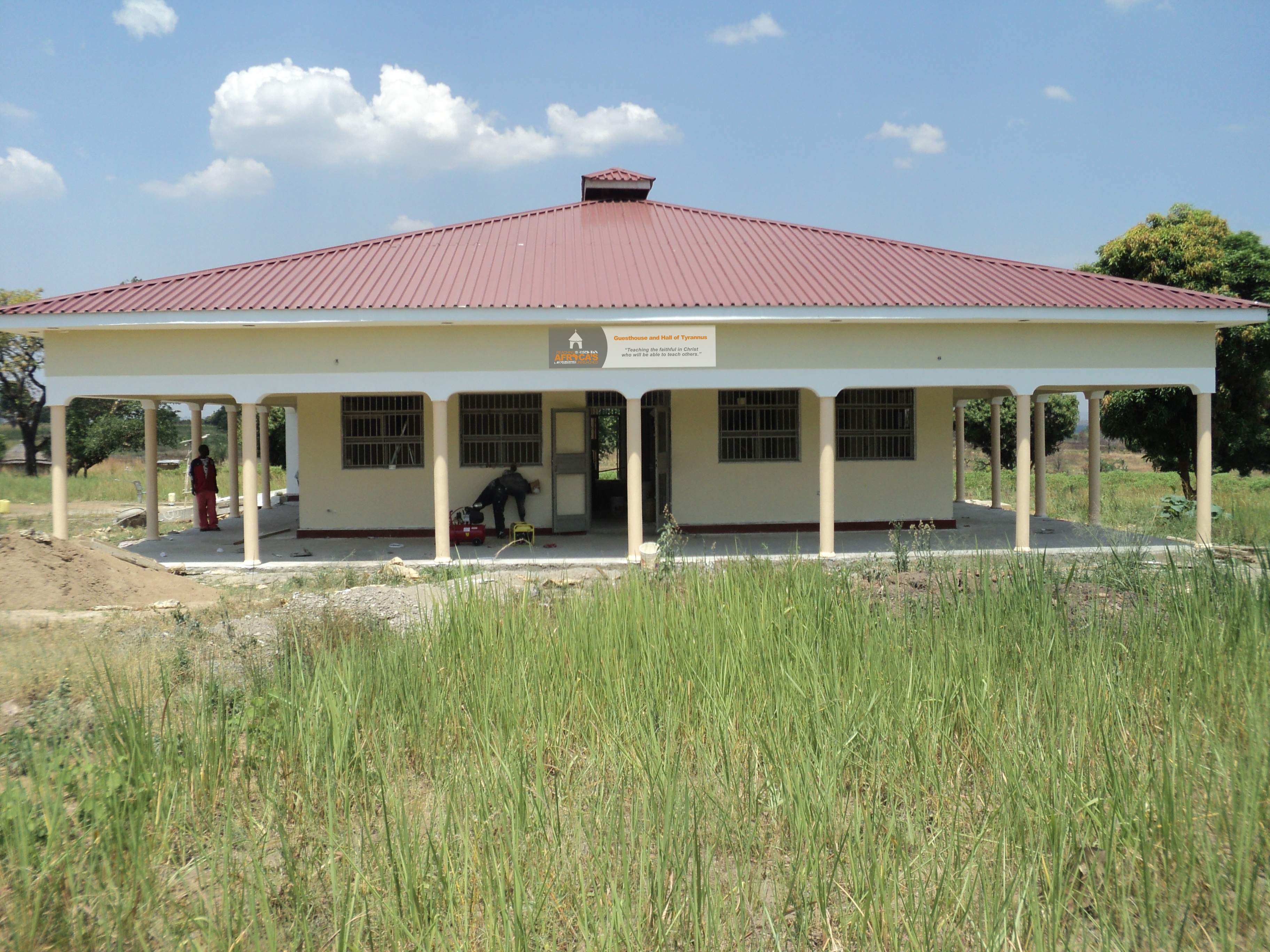
Inside work on the Guesthouse/Hall of Tyrannus

Because of the faithful prayers and gifts of God’s people work has resumed on the inside of the Guesthouse/Hall of Tyrannus. The Lord’s grace and mercy has been with us every step of the way! Please continue in your prayers for God’s grace and provision!

( Pictures may be enlarged by clicking over them)

Guesthouse kitchen counter top
Tile work in the Hall of Tyrannus
The Hallway runs all the way directly through the center of the Guesthouse affectedly catching breezes either from the north or the south.
The Hallway runs all the way directly through the center of the Guesthouse affectedly catching breezes  from the north and the south.

Jacob and Carol's living quarters
Jacob and Carol’s living quarters

Bedroom floor

Jacob and Carol's Room

Bathroom 1

The glass has now been installed in the windows and doors

Front View

R.A.U. Grounds Layout

Everything is yours Lord!

A dear friend and sister in the Lord pointed Carol and me to this beautiful song on YouTube. All the pictures and words have greatly touched my heart in a very special way. It brings great joy to my heart at the great privilege which has been given to Carol and me by our Lord and King!. 

We are moving ahead with joy!!