OTHERS MAY, YOU CANNOT

A word we all need to hear!

OTHERS MAY, YOU CANNOT  By G.D. Watson

“If anyone wishes to come after Me, he must deny himself, and take up his cross and follow Me. For whoever wishes to save his life will lose it; but whoever loses his life for My sake will find it.”
(Matthew 16:24-25)

If God has called you to be truly like Jesus in all your spirit, He will draw you into a life of crucifixion and humility. He will put on you such demands of obedience that you will not be allowed to follow other Christians. In many ways, He seems to let other good people do things which He will not let you do.
Others who seem to be very religious and useful may push themselves, pull wires, and scheme to carry out their plans, but you cannot. If you attempt it, you will meet with such failure and rebuke from the Lord as to make you sorely penitent.
Others can brag about themselves, their work, their successes, their writings, but the Holy Spirit will not allow you to do any such thing. If you begin to do so, He will lead you into some deep mortification that will make you despise yourself and all your good works.
Others will be allowed to succeed in making great sums of money, or having a legacy left to them, or in having luxuries, but God may supply you only on a day-to-day basis, because He wants you to have something far better than gold, a helpless dependence on Him and His unseen treasury.
The Lord may let others be honored and put forward while keeping you hidden in obscurity because He wants to produce some choice, fragrant fruit for His coming glory, which can only be produced in the shade.
God may let others be great, but keep you small. He will let others do a work for Him and get the credit, but He will make you work and toil without knowing how much you are doing. Then, to make your work still more precious, He will let others get the credit for the work which you have done; this to teach you the message of the Cross, humility, and something of the value of being cloaked with His nature.
The Holy Spirit will put a strict watch on you, and with a jealous love rebuke you for careless words and feelings, or for wasting your time, which other Christians never seem distressed over.
So make up your mind that God is an infinite Sovereign and has a right to do as He pleases with His own, and that He may not explain to you a thousand things which may puzzle your reason in His dealings with you.
God will take you at your word. If you absolutely sell yourself to be His slave, He will wrap you up in a jealous love and let other people say and do many things that you cannot. Settle it forever; you are to deal directly with the Holy Spirit, He is to have the privilege of tying your tongue or chaining your hand or closing your eyes in ways which others are not dealt with. However, know this great secret of the Kingdom: When you are so completely possessed with the Living God that you are, in your secret heart, pleased and delighted over this peculiar, personal, private, jealous guardianship and management of the Holy Spirit over your life, you will have found the vestibule of heaven, the high calling of God.
By G.D. Watson

G.D.Watson (1845-1924) was a Wesleyan Methodist minister and evangelist based in Los Angeles. His evangelistic campaigns took him to England, the West Indies, New Zealand, Australia, Japan and Korea. He also wrote several books.
http://www.BulletinInserts.org

When Will Christ Return?

67405776_10156332803903053_6207717941752889344_n

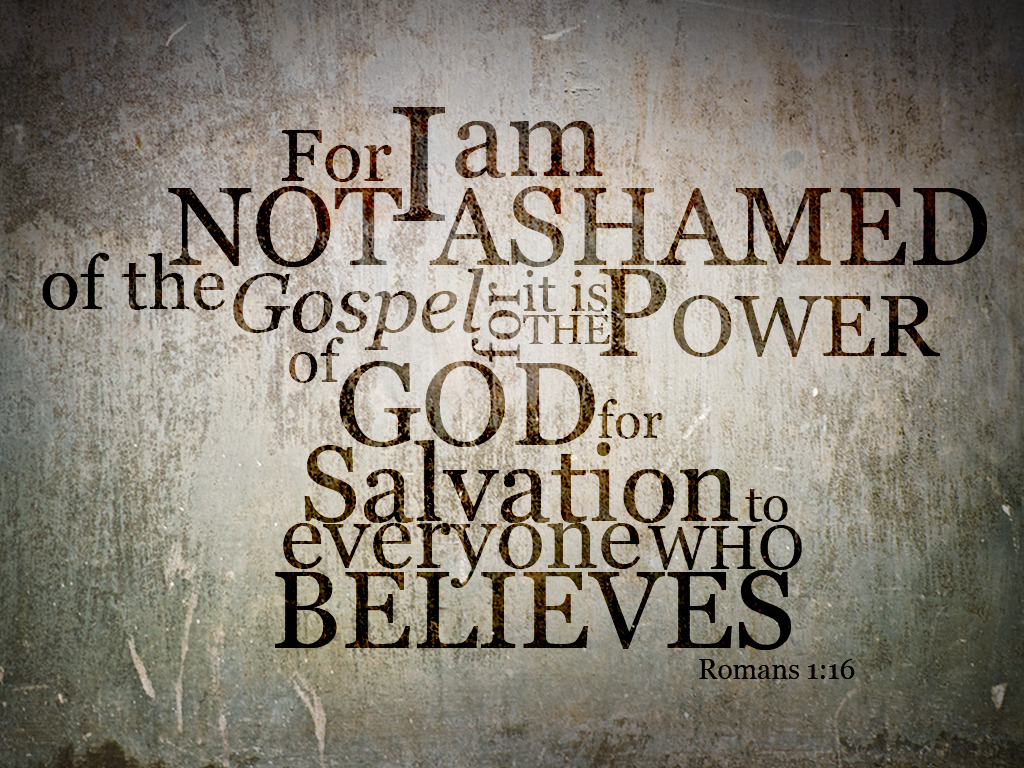
When will Christ return? We are told  when in Matthew 24:14!

“And this gospel of the kingdom
will be proclaimed
throughout the whole world
as a testimony to all nations,
and then the end will come.”
Matthew 24:14

Wise words from New Testament scholar George Eldon Ladd:

“The subject of this chapter is, When will the Kingdom come? I am not setting any dates. I do not know when the end will come.

And yet I do know this: When the Church has finished its task of evangelizing the world, Christ will come again. The Word of God says it.

Why did He not come in A.D. 1oo? Because the Church had not evangelized the world.

Why did He not return in a.d. 1000? Because the Church had not finished its task of world-wide evangelization.

Is He coming soon? He is—if we, God’s people, are obedient to the command of the Lord to take the Gospel into all the world.

. . .  “How are we to know when the mission is completed? How close are we to the accomplishment of the task? Which countries have been evangelized and which have not? How close are we to the end? Does this not lead to date-setting?”

I answer, I do not know. God alone knows the definition of terms. I cannot precisely define who “all the nations” are. Only God knows exactly the meaning of “evangelize.” He alone, who has told us that this Gospel of the Kingdom shall be preached in the whole world for a testimony unto all the nations, will know when that objective has been accomplished.

But I do not need to know. I know only one thing: Christ has not yet returned; therefore the task is not yet done. When it is done, Christ will come. Our responsibility is not to insist on defining the terms of our task; our responsibility is to complete it. So long as Christ does not return, our work is undone. Let us get busy and complete our mission.

. . .  Here is the motive of our mission: the final victory awaits the completion of our task. “And then the end will come.” There is no other verse in the Word of God which says, “And then the end will come.”

When is Christ coming again? When the Church has finished its task.

When will This Age end? When the world has been evangelized.

“What will be the sign of your coming and of the close of the age?” (Matt. 24: 3). “This gospel of the kingdom will be preached throughout the whole world as a testimony to all nations; and then, and then, the end will come.” When? Then; when the Church has fulfilled its divinely appointed mission.

Do you love the Lord’s appearing? Then you will bend every effort to take the Gospel into all the world. It troubles me in the light of the clear teaching of God’s Word, in the light of our Lord’s explicit definition of our task in the Great Commission (Matt. 28: 18-20) that we take it so lightly. “All authority in heaven and on earth has been given to me.” This is the Good News of the Kingdom. . . .  All authority is His. “Go ye therefore.” Wherefore? Because all authority, all power is His, and because He is waiting until we have finished our task. His is the Kingdom; He reigns in heaven, and He manifests His reign on earth in and through His Church. When we have accomplished our mission, He will return and establish His Kingdom in glory. To us it is given not only to wait for but also to hasten the coming of the day of God (II Pet. 3:12). This is the mission of the Gospel of the Kingdom, and this is our mission.”

George Eldon Ladd, The Gospel of the Kingdom: Scriptural Studies in the Kingdom of God (Grand Rapids, MI: Eerdmans, 1959), ch. 9, “When Will the Kingdom Come?”

Thank you for this great reminder and encouragement Justin Taylor!

We brought nothing into the world, and we cannot take anything out of the world!

“…we brought nothing into the world, and we cannot take anything out of the world.” (1 Timothy 6:7-See also Ecc. 5:15, Ps.40:17 & Job 1:21). Sobering thought!!! Our lives are like a “vapor/puff of smoke“. Naked and penniless we come into the world and we are buried in the same manner. We are to “number our days” and “redeem” the time for days are few before our death.

The flip side is that we are called to “lay up treasures in heaven“. “Do not lay up for yourselves treasures on earth, where moth and rust destroy and where thieves break in and steal, but lay up for yourselves treasures in heaven, where neither moth nor rust destroys and where thieves do not break in and steal.” (Matthew 6:19-20). What are these treasures in “heaven” which cannot be destroyed?—PEOPLE and our acts of SERVICE done in Jesus and for the spread of HIS fame!

Let us be about living for the ETERNAL!

The ministry model of Jesus…“In the ministry of Jesus words and works, gospel preaching and compassionate service went hand in hand. His works expressed his words, and his words explained his works. It should be the same for us. Words are abstract, they need
to be embodied in deeds of love. Works are ambiguous, they
need to be interpreted by the proclamation of the gospel.
Keep words and works together in the service and witness of
the church.” John Stott

Viewpoint: South Sudan has not lived up to the Hype

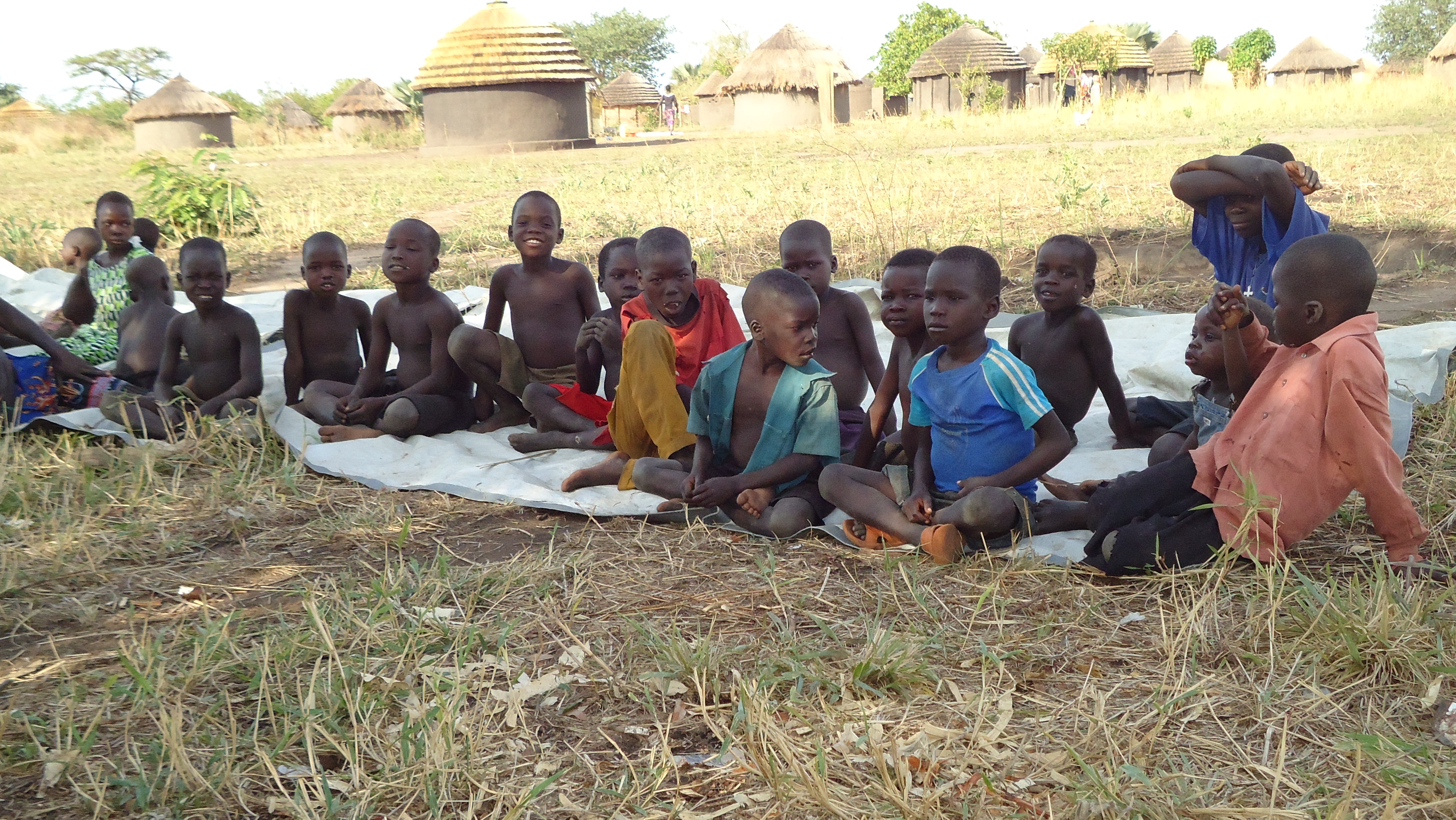
According to this report inflation in South Sudan was 80% in May and it now has the  highest maternal mortality rate in the world. These are only a few of the issues this  one year old country faces. Reaching Africa’s Unreached will by God’s grace continue to proclaim the gospel and live out God’s mercy to those in need. Let us pray and work together to make Jesus known here and the surrounding regions!

From the BBC News-Africa:

Viewpoint: South Sudan has not lived up to the hype

Celebrations following South Sudan independence referendum

As South Sudan prepares to celebrate the first anniversary of its independence, blogger PaanLuel Wel discusses whether the world’s newest country has lived up to the hopes of a year ago.

There were great celebrations and high expectations when South Sudan finally seceded from the Sudan on 9 July, 2011.

Yet barely a year into South Sudan’s much-hyped independence, the country has failed miserably to live up to expectations.

It has been gripped by both external and internal problems that are threatening to tear it apart in its infancy.

Nevertheless, there is hardly any regret among South Sudanese citizens for the overwhelming 98% vote they gave for South Sudan’s independence from Khartoum.

South Sudan’s independence was greatly welcomed because it not only heralded the end of more than 50 years of bitter conflict between the two Sudans, but also the beginning of political reconciliation among South Sudanese.

It was also expected to offer South Sudanese an opportunity to embark on the path of much-needed economic development and political democratization.

For the many oppressed South Sudanese, it was to be a new era to finally enjoy those economic privileges, democratic rights and civil liberties that they had long been deprived of by Khartoum.

Sadly though, disillusionment, bitterness and uncertainty now reign large and wide across the young country.

“The government reneged on its promise of free university education as crippling austerity measures were introduced to save money”

Two kinds of problems confront the world’s newest independent nation: Unresolved issues between Khartoum and Juba, and internal issues surround corruption, insecurity and the failure of leadership among South Sudan’s ruling party, the SPLM.

The contested issues between Khartoum and Juba – border demarcations, the contested region of Abyei, the disputes over oil and the accusations of harbouring and supporting each other’s rebel groups – have doggedly undermined the socio-economic and political development of South Sudan.

Disputes have led to deadly fighting in the border town of Jau and the disputed oil-rich town of Panthou/Heglig.

The government of South Sudan has done little since independence to diversify the economy and reduce South Sudan’s dependency on oil revenues, currently at 98% of the national budget.

Although South Sudan took with it more than 75% of total oil reserves after separation, it still needs Khartoum’s oil facilities and port in order to export it to international markets, yet the two countries have repeatedly failed to agree on transit fees.

South Sudan is now calling for international arbitrations over contested borders while Khartoum is demanding that the agreement must be based on the 2005 peace accord borderline, as opposed to the 1956 borders.

The stalemate over the negotiations, coupled with accusations of oil theft and arbitrary oil diversion by Khartoum, prompted South Sudan to shut down all oil productions, sending the economy into free-fall.

Inflation soared to more than 80% in May.

The government reneged on its promise of free university education as crippling austerity measures were introduced to save money.

Sudan People's Liberation Army soldiers
“With all the security problems, military spending remains high”

Making matters worse, South Sudan failed to get any short-term loans from international partners to shore up its dwindling national reserves.

China, the main buyer of South Sudan’s oil, has refused to fund the much-publicised alternative oil pipeline for South Sudan through Kenya.

While the government may not be entirely blamed for all the external problems bedevilling the country, it bears the blame for its internal woes.

Since independence, the SPLM has failed to restore law and order within the country.

Armed rebellions and inter-ethnic violence – fuelled by alleged political marginalization, vote rigging, cattle rustling and land disputes – is widespread across the new nation.

In December 2011, the fighting between the Nuer and the Murle tribes of Jonglei State reportedly killed more than 600 people.

Of the 10 states that make up South Sudan, seven of them are directly involved in either armed rebellions or inter-tribal disputes.

‘Global problem child’

Moreover, South Sudan has not lived up to its expectations because of rampant corruption and wanton mismanagement within the government.

In the wake of the loss of oil revenue, the president was compelled to acknowledge that more than $4bn (£2.5bn) has been lost within the past seven years.

The Africa Debate

Tune in to the BBC World Service at 1900 GMT on Friday to listen to The Africa Debate broadcast from Juba – South Sudan: Has independence lived up to your expectations?

Or take part in Twitter – using #bbcafricadebate – Facebook or Google+

For example, about $200m (£128m) was lost in botched grain contracts and a ministry charged with purchasing government vehicles ended up paying an inflated price of $400,000 (£256,000) per vehicle.

There is a strong perception that top government positions and job promotions are determined by whom you know, not what you know.

The failure by the government of South Sudan to stem the cycles of violence and to eradicate corruption and tribalism has effectively stalled economic development and disrupts social lives.

There is hardly any substantial investment in agricultural productivity, social facilities, infrastructure, trade or development.

This failure has left more than half of the country’s population at the mercy of abject poverty, chronic diseases and violent crimes.

The United Nations Population Fund reports that South Sudan has the highest maternal mortality rate in the world.

This is mainly due to the inadequacy of health care and educational facilities in the new nation.

Nonetheless, it is possible for South Sudan to overcome its major problems.

The government should diversify the economy to reduce over-reliance on oil revenues, while striving to curb corruption and combat tribalism.

Tackling corruption and tribalism would enable the government to invest in sorely needed economic infrastructure and social amenities.

Although people’s expectations were not met and despite the fact that South Sudan is being regarded as “a global problem child” in its infancy, the people of the republic of South Sudan are not regretting their overwhelming vote for independence.

South Sudanese citizens are grateful that they now have an independent state of their own.

PaanLuel Wël is the managing editor of PaanLuel Wël: South Sudanese Bloggers

Sudan: A country divided

Map showing infant Mortality in Sudan, source: Sudan household health survey 2006 The health inequalities in Sudan are illustrated by infant mortality rates. In South Sudan, one in 10 children die before their first birthday. Whereas in the more developed northern states, such as Gezira and White Nile, half of those children would be expected to survive