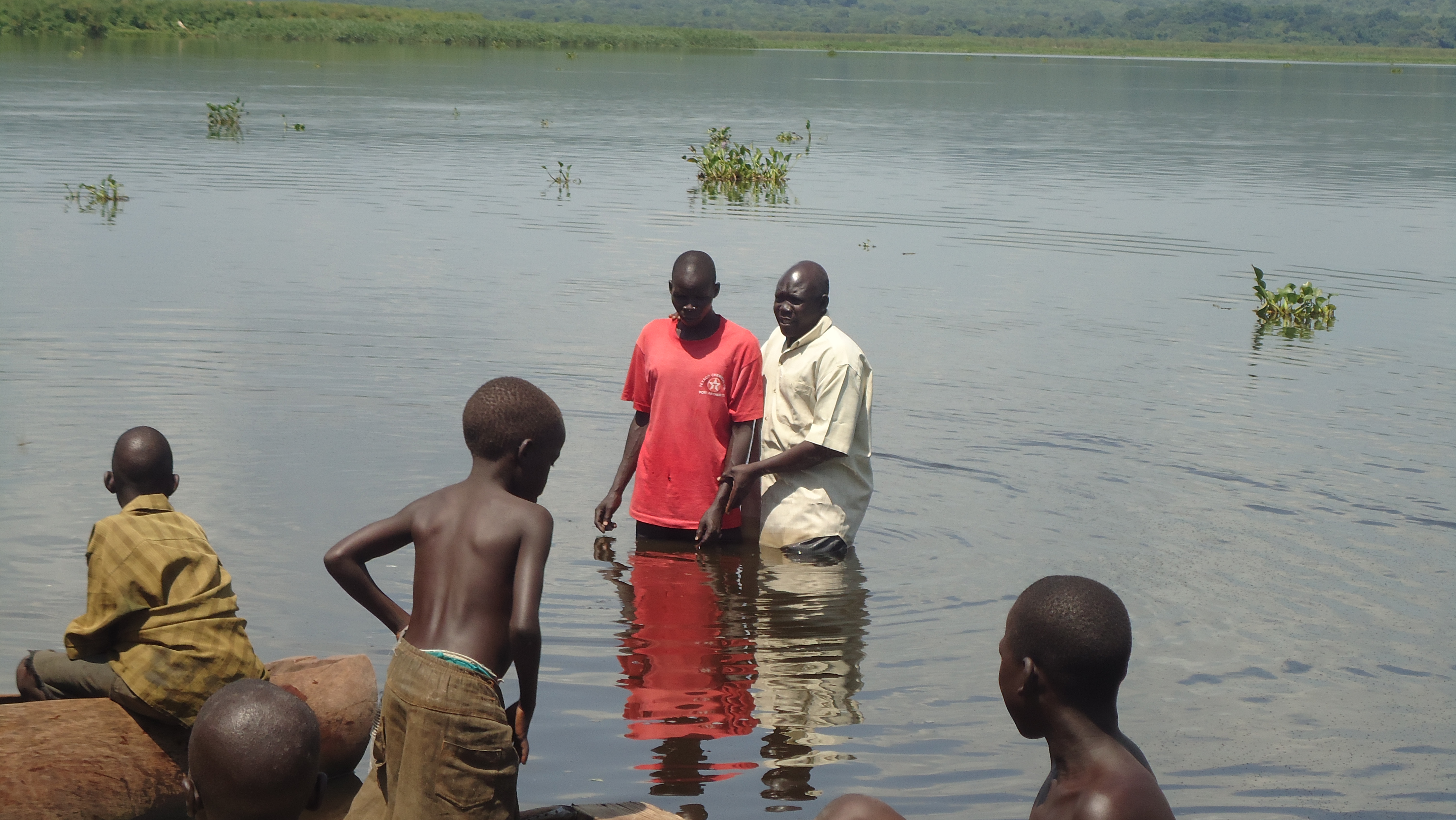
New R.A.U. Map Logo


The new state is rich in oil, but also one of the world’s least developed countriesSouth Sudan has become the world’s newest nation, the climax of a process made possible by the 2005 peace deal that ended a long and bloody civil war.
Sudan’s President Omar al-Bashir and UN Secretary General Ban Ki-moon are among international dignitaries attending celebrations in the capital, Juba.
Sudan earlier became the first state to officially recognise its new neighbour.
The south’s independence follows decades of conflict with the north in which some 1.5 million people died.
Celebrations in Juba began at midnight (2100 GMT). A countdown clock in the city centre reached zero and the new national anthem was played on television.
South Sudan became the 193rd country recognised by the UN and the 54th UN member state in Africa.
Officials had planned for people to hold quiet celebrations at home, with the formal declaration of independence due later on Saturday.
But the people clearly couldn’t wait. Two hours before midnight and lines of cars zoomed around town packed with people waving flags and waiting to celebrate.
When the final countdown arrived, the atmosphere was wild. Groups ran down roads, dancing to drum beats. Soldiers and policemen joined in too, waving paper flags and laughing.
A sign read: “Congratulations, free at last, South Sudan.” But the people didn’t need to read the message – they were already dancing and leaping with happiness.
“It is a shout of freedom,” said Alfred Tut, lifting his head back and screaming.
The BBC’s Will Ross in Juba says the new country’s problems are being put aside for the night, and there is an air of great jubilation.
People are in the streets, cheering, waving South Sudan flags, banging drums and chanting the name of President Salva Kiir Mayardit, he adds.
A formal independence ceremony is due to be held later on Saturday.
The Speaker of the South Sudan Legislative Assembly, James Wani Igga, is expected to read out the Proclamation of the Independence of South Sudan at 1145 (0845 GMT). Minutes later Sudan’s national flag will be lowered and the new flag of South Sudan will be raised.
In addition to Mr Bashir and Mr Ban, attendees will include former US Secretary of State Colin Powell, the US permanent representative to the UN, Susan Rice, and the head of the US military’s Africa Command, Gen Carter Ham.
Under the Comprehensive Peace Agreement, a referendum was held on independence, which was favoured by more than 99% of voters.
The new country is rich in oil, but one of the least developed countries in the world, where one in seven children dies before the age of five.
Unresolved disputes between the north and south, particularly over the new border, have also raised the possibility of renewed conflict.
On Friday, Sudan’s Minister of Presidential Affairs, Bakri Hassan Saleh, announced that it recognised “the Republic of South Sudan as an independent state, according to the borders existing on 1 January 1956”, when Sudan gained independence from Britain.
Facts and figures:
Challenges ahead:
‘Southern brothers’
President Bashir, who agreed the 2005 peace deal with the Sudan People’s Liberation Army (SPLA), stressed his country’s “readiness to work with our southern brothers and help them set up their state so that, God willing, this state will be stable and develop”.
“The co-operation between us will be excellent, particularly when it comes to marking and preserving the border so there is a movement of citizens and goods via this border,” he told journalists in Khartoum.
Fears of fresh conflict resurfaced after recent fighting in two border areas, Abyei and South Kordofan, which forced some 170,000 people from their homes.
But separate deals – and the withdrawal of rival forces from the border – have calmed tensions.
The UN Security Council has passed a resolution approving a new 7,000-strong peacekeeping force for South Sudan – but this is basically a rebranding of the force which was already in Sudan, mostly in the south.
Khartoum has said its mandate would not be renewed, leading the US to argue that the 1,000 UN troops should be allowed to remain in South Kordofan. The 1,000 troops in the disputed town of Abyei are to be replaced by 4,200 Ethiopian soldiers.
Our correspondent says keeping both the north and the south stable long after the celebratory parties have ended will be a mighty challenge.
Click to play
All you need to know about South Sudan’s independence
The two sides must still decide on issues such as drawing up the new border and how to divide Sudan’s debts and oil wealth.
Analysts say the priority for Khartoum will be to negotiate a favourable deal on oil revenue, as most oilfields lie in the south. At present, the revenues are being shared equally.
Khartoum has some leverage, as most of the oil pipelines flow north to Port Sudan on the Red Sea.
Citizenship is also a key issue which has not yet been decided.
A new law passed by the National Assembly in Khartoum has withdrawn Sudanese citizenship from all southerners.
The UN refugee agency (UNCHR), has urged both governments to prevent statelessness.
The great divide across Sudan is visible even from space, as this Nasa satellite image shows. The northern states are a blanket of desert, broken only by the fertile Nile corridor. South Sudan is covered by green swathes of grassland, swamps and tropical fo
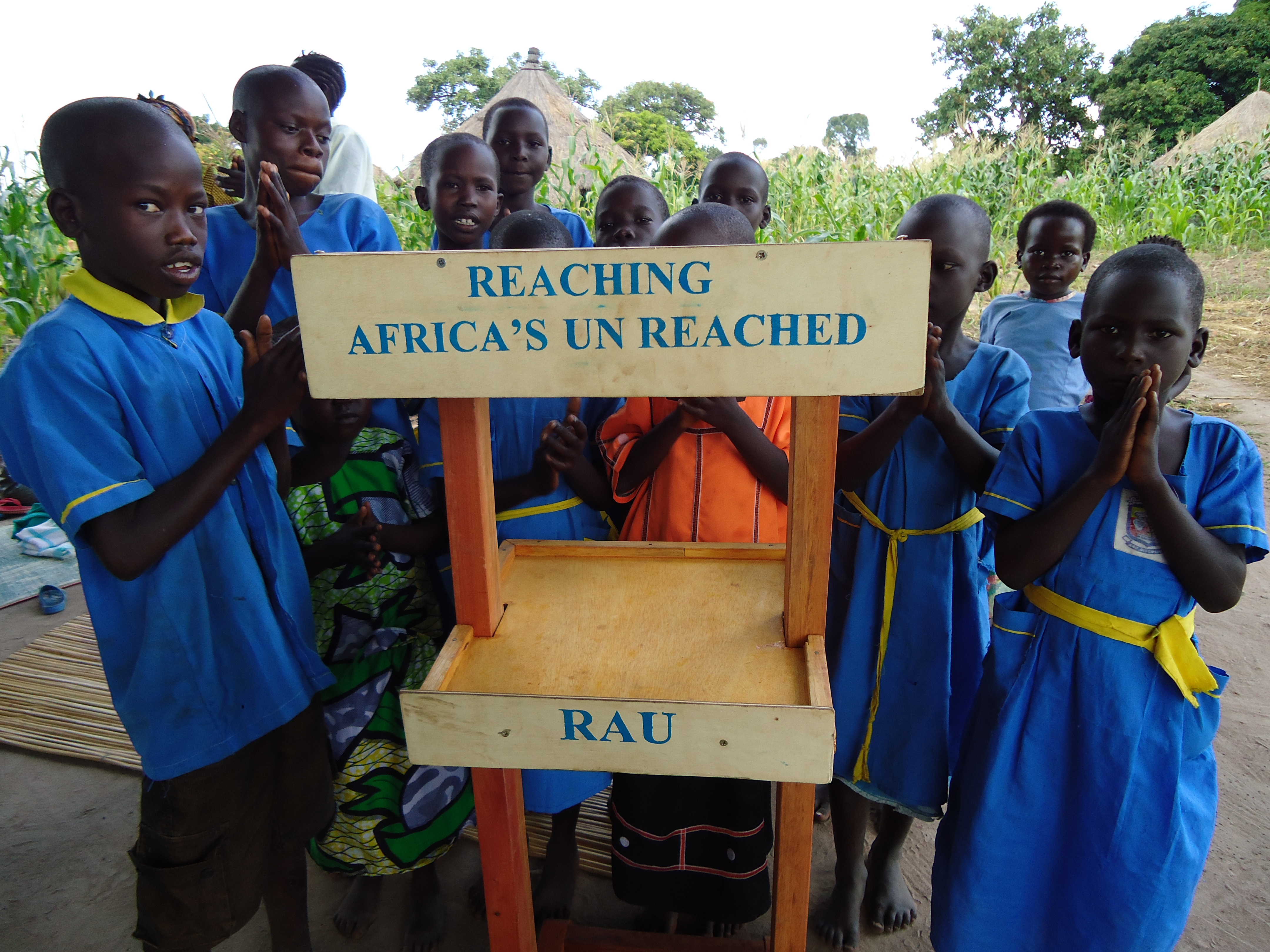
Abuk Ngor Anyuon and Akuc Kiir Deng
If you think that enslaving blacks ended in the 19th century, you are dead wrong. Last week 603 black women and children were freed from the horrors of chattel slavery that to this day exists in Sudan, Africa’s largest country. Christian Solidarity International USA, a Christian human rights organization, frees slaves in Sudan. The stories the freed slaves tell them are simply horrific.
Abuk Ngor Anyuon was forcibly converted to Islam; her genitalia mutilated. Two of her sons were sold off to another master and her finger was cut off. Akuc Kiir Deng also accepted Islam under the threat of death. Akuc was blinded and ritually circumcised, and two of her children were taken from her. Akuot Anei Wol, freed last September, recollects: “I lost my sight in my eye soon after I was captured. I was still just a girl then. My master’s wife was called Howah. She made me grind grain and clean the house. One day, she was angry and accused me of failing to wash the dishes and sweep the floor properly. Howah grabbed a horse whip and struck me in the face. It hit me in the eye. I lost sight immediately. Howah said: “I’ll blind your other eye if you don’t work.”
Slavery in Sudan, a centuries-old phenomenon, gained widespread publicity in the United States in the 90’s. At that time an Arab regime in the Northern Sudan declared a “holy war” (jihad) against the African population of the South, which is largely Christian and animist. Arab militias, sponsored by the government and often joined by the Sudanese army, raided hundreds of villages, executing the men and taking women and children into slavery in the North. Unlike in the American South, slave owners in Sudan do not need the muscles of men to work plantations: they use boys as goat herds, and women for sex and for their wombs, to produce children who will be Muslims.
When confronted with facts of modern-day enslavement of blacks in the 1990’s, many Americans joined the neo-abolitionist movement spearheaded by groups like CSI in Europe and our own American Anti-Slavery Group. Some donated and raised funds to free Sudanese slaves; others participated in demonstrations and lobbied politicians. CSI’s emancipation operations were extensively covered by the media. The movement’s efforts bore fruit when the US-brokered Comprehensive Peace Agreement (CPA) forced the suspension of the slave raids in 2005.
As a consequence, Americans’ interest in Sudanese slaves decreased. Today, when up to 35,000 of blacks are still enslaved by the Arabs in the North, the media has fallen silent on the issue. Human rights giants like Human Rights Watch, which were never particularly helpful, also abandoned these slaves: a simple search of HRW’s website for “Sudan slavery” reveals that its most recent related report dates back to 2003.
As Sudan approaches January 9, 2011 – the day the Southerners are scheduled to vote to remain with the North or to secede – the chances to emancipate those still in bondage become increasingly smaller. Most experts believe the South will vote for independence. No one can predict the Muslim reaction in the North to the South’s choice of freedom. There is the possibility of revenge attacks and acts of violence against the slaves and other Southerners living in the North. Some even think the North-South war might be rekindled.
Yesterday The New York Times reported on a speech given by Sudan’s President Omar Hassan Al-Bashir, an indicted war criminal, who promised to impose Islamic Law (Shariah) in the North in case separation. “Shariah and Islam will be the main source for the Constitution, Islam the official religion and Arabic the official language,” he said. Al-Bashir also indicated that in his future state there will be no protection for non-Arab, non-Muslim minorities: “If South Sudan secedes, we will change the Constitution, and at that time there will be no time to speak of diversity of culture and ethnicity.” Interestingly, The New York Times “forgot” to report on his recent statement reflective of the state he envisions. Commenting on the popular YouTube video that shows a woman being flogged in public by the police, Al Bashir said: “If she is lashed according to Shariah law, there is no investigation. Why are some people ashamed? This is Shariah.”
CSI and the AASG are determined to liberate as many slaves as possible before the referendum takes place.
To learn how you can help visit www.iabolish.org.
——————– See also:
Our family has prayed together through the remarkable book Operation World over the last several years. When you engage seriously with that book, you see that the training of indigenous Christian leaders in the nations of the world is one of the crying needs of modern missions. Page after page, country after country, theological education emerges as a critical need.
Without the work of theological education, there won’t be a lasting, effective Christian witness. Thankfully, many fantastic ministries are devoted to this task, including newer ones like Training Leaders International, whose website says for every 450,000 people outside the United States there is only one formally trained church leader.
I’ve never heard a more powerful expression of the importance of international theological education than the one recently shared with me by Jerry Bingham, a passionate, energetic, 72-year-old missionary who serves with Action International in Uganda. Jerry’s story comes from his decade-plus of missionary work in Mexico many years ago. He was involved in film evangelism in southern Mexico and had traveled with two Mayan pastors to a new area so they could show the Jesus film. As was their custom, upon coming to a new village they requested permission to show the film from the village chief.
The chief agreed to let Jerry show the film but commented that there was already a church in the village. Jerry and his companions were surprised and looked around to see the church. They couldn’t see one. The chief ducked into his hut, brought out four machetes, handed them around, and said, “Follow me.” With a number of other tribesmen now following along, Jerry and his team walked about 100 yards into the dense jungle and arrived in an area where they saw a huge mountain of vines growing over something. The reason for the machetes became clear.
After 40 minutes of hacking at the vines, the group uncovered a small building (about 8 feet by 8 feet) with a washed-out white cross on the roof line. Above the chapel door was an inscription: “Iglesia Presbiteriana—1847.” Jerry began to weep aloud. His immediate thoughts were (in his own words): “Do you mean to tell me that the Presbyterians were here in the 1800s with the gospel of Jesus Christ, and these people are now steeped into animism and witchcraft practices?” The work hadn’t borne any lasting fruit.
That day became pivotal for Jerry’s life and ministry. He realized that the crucial piece missing from his ministry was training leaders and so began working in pastoral leadership development, with 2 Timothy 2:2 as an encouragement and guide. His commitment to the long-term health of the church through training leaders continues today through his work in northern Uganda with the largest East African tribe, the Acholi. Jerry explains:
The real need is to train leadership for the church of Jesus Christ. Pastors, youth leaders, children workers. This is what we do in Africa. May we all catch the vision of the need to train our brothers and sisters in Christ. If we follow the teachings in the New Testament of training leadership [who] will in turn train others, who will in turn train others, we will see a great advancement for the gospel of our Lord.
Stephen Witmer is the pastor of Pepperell Christian Fellowship in Pepperell, Massachusetts. He serves on the editorial board of Themelios and is author of the forthcoming Good Book Guide to Jonah.

Amy Carmichael’s Dream
“The tom-toms thumped straight on all night and the darkness shuddered round me like a living, feeling thing. I could not go to sleep, so I lay awake and looked; and I saw, as it seemed, this:
That I stood on a grassy sward, and at my feet a precipice broke sheer down into infinite space. I looked, but saw no bottom; only cloud shapes, black and furiously coiled, and great shadow-shrouded hollows, and unfathomable depths. Back I drew, dizzy at the depth.
Then I saw forms of people moving single file along the grass. They were making for the edge. There was a woman with a baby in her arms and another little child holding on to her dress. She was on the very verge. Then I saw that she was blind. She lifted her foot for the next step . . . it trod air. She was over, and the children over with her. Oh, the cry as they went over!
Then I saw more streams of people flowing from all quarters. All were blind, stone blind; all made straight for the precipice edge. There were shrieks, as they suddenly knew themselves falling, and a tossing up of helpless arms, catching, clutching at empty air. But some went over quietly, and fell without a sound.
Then I wondered, with a wonder that was simply agony, why no one stopped them at the edge. I could not. I was glued to the ground, and I could only call; though I strained and tried, only whisper would come.
Then I saw that along the edge there were sentries set at intervals. But the intervals were too great; there were wide, unguarded gaps between. And over these gaps the people fell in their blindness, quite unwarned; and the green grass seemed blood-red to me, and the gulf yawned like the mouth of hell.
Then I saw, like a little picture of peace, a group of people under some trees with their backs turned toward the gulf. They were making daisy chains. Sometimes when a piercing shriek cut the quiet air and reached them, it disturbed them and they thought it a rather vulgar noise. And if one of their number started up and wanted to go and do something to help, then all the others would pull that one down. “Why should you get so excited about it? You must wait for a definite call to go! You haven’t finished your daisy chain yet. It would be really selfish,” they said, “to leave us to finish the work alone.”
There was another group. It was made up of people whose great desire was to get more sentries out; but they found that very few wanted to go, and sometimes there were no sentries set for miles and miles of the edge.
Once a girl stood alone in her place, waving the people back; but her mother and other relations called and reminded her that her furlough was due; she must not break the rules. And being tired and needing a change, she had to go and rest for awhile; but no one was sent to guard her gap, and over and over the people fell, like a waterfall of souls.
Once a child caught at a tuft of grass that grew at the very brink of the gulf; it clung convulsively, and it called-but nobody seemed to hear. Then the roots of the grass gave way, and with a cry the child went over, its two little hands still holding tight to the torn-off bunch of grass. And the girl who longed to be back in her gap thought she heard the little one cry, and she sprang up and wanted to go; at which they reproved her, reminding her that no one is necessary anywhere; the gap would be well taken care of, they knew. And then they sang a hymn.
Then through the hymn came another sound like the pain of a million broken hearts wrung out in one full drop, one sob. And a horror of great darkness was upon me, for I knew what it was-the Cry of the Blood.
Then thundered a voice, the voice of the Lord. “And He said, ‘What hast thou done, The voice of thy brother’s blood crieth unto me from the ground.'”
The tom-toms still beat heavily, the darkness still shuddered and shivered about me; I heard the yells of the devil-dancers and weird, wild shriek of the devil-possessed just outside the gate.
What does it matter, after all? It has gone on for years; it will go on for years. Why make such a fuss about it?
God forgive us! God arouse us! Shame us out of our callousness! Shame us out of our sin!”
Amy Carmichael (December 16, 1867 – January 18, 1951)