Blessings Overflowing!


“Now to him who is able to do far more abundantly than all that we ask or think, according to the power at work within us, to him be glory in the church and in Christ Jesus throughout all generations, forever and ever. Amen.”
~Ephesians 3:20-21~

These are the verses which come to my mind as I think back over our first three and half weeks here in Africa. Since July 22nd we have been here at RAU making the Guesthouse/Hall of Tyrannus into a home and place of discipleship. God is blessing and helping us by His grace and with the help of many here and in America! The RAU team,Carol,and I are all very,very grateful!
I have a number of praise reports to give to you! God is good and He is good all the time!

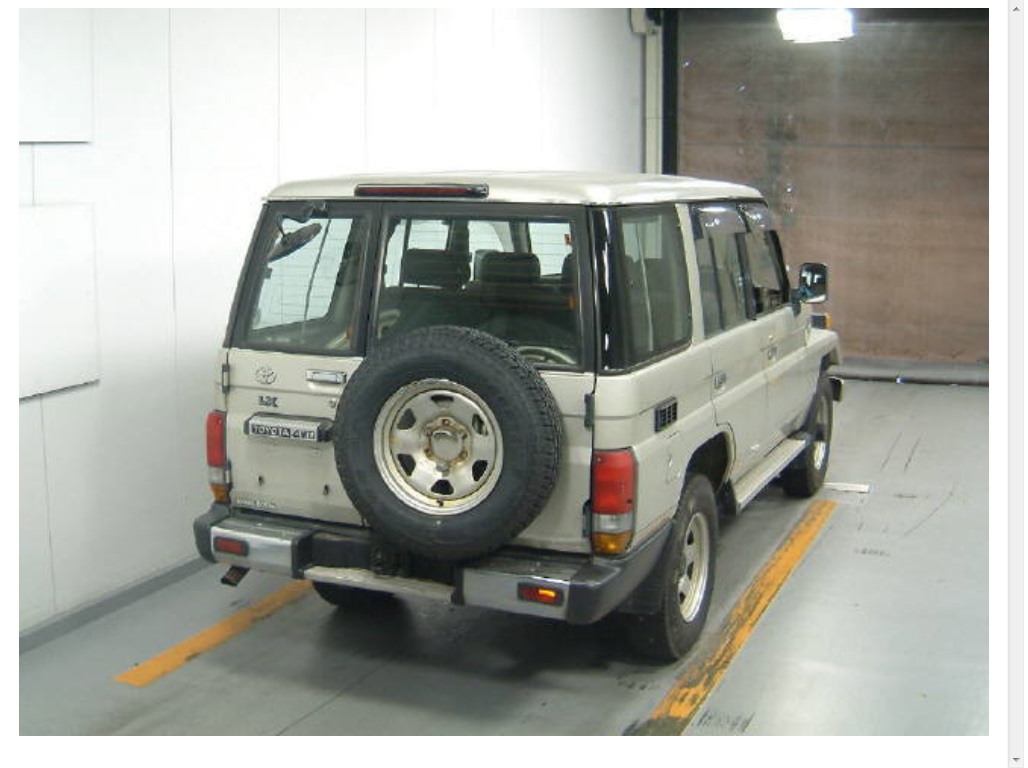
* In our past newsletters we have been updating you on the 1999 Land Cruiser we have been saving up to purchase. When we last wrote we still needed $8,000 to purchase it, ship it to Mombasa Kenya from Japan, drive it to Kampala, pay taxes, and outfit it for the bush. I am happy to report to you these funds have been graciously and lovingly provided. The vehicle has been ordered and we should have it in 6-8 weeks. Currently whenever I need to go to Moyo for supplies it has nearly taken up a half a day as Sam and I have to walk until we can find a boda (motorcycle taxi), do our shopping and then find one for the ride back. This vehicle will not only help us in this way but will also allow us to go out to minister more freely. Praise the Lord for this provision!
*In our last newsletter Carol shared the need of security and the  funds necessary for that provision. The Lord, through His people, has graciously granted us the funds to take care of this need for one entire year! Hallelujah!


*We have also been able to do some more work on the Guesthouse/Hall of Tyrannus and grounds because of the gifts of God’s people. PTL! Our goal is to have a place where pastors,evangelists,church leaders, and church planters can come for short discipleship retreats and return to their congregations refreshed, strengthened, and encouraged to plant churches in the unreached villages and people groups in their geographic areas.We also want to be able to graciously host short term mission teams which would come to share their God given gifts with the people. So far three are planning to come before Christmas. With $5,000 more we could be fully operational. There are so many details which, now that we have been on here, have become evident as optimal if we are going to run smoothly.

* The RAU team has planned for a dedication service to be held on May 10th from 9AM to 2PM to give public thanks to our God and King for all that He has done. It will also be a time to thank all those who have helped us in this journey. Pastors from local churches and from churches in South Sudan as well as Kampala will be in attendance; also local, district and federal political leaders will be invited. A meal will be served. The woman from Abraham’s church as well as the women from a church near us will assist in the cooking and serving.  There will be time for speeches and also a time of RAU leaders sharing their vision and plans. Abraham is sending invitations to key people, but we have been told that there may be any number of others who want to come and see what is happening!  I wish that all our American supporters could be here!  In March of 2010, RAU was formed, land was purchased; ground was broken for the building of the Guesthouse/Hall of Tyrannus in August of 2011. Now, two years, later I am writing from an area which was African bush land just two years ago! Our Lord is to be PRAISED!

“Unless the Lord builds the house,
    those who build it labor in vain.”

Psalms 127:1

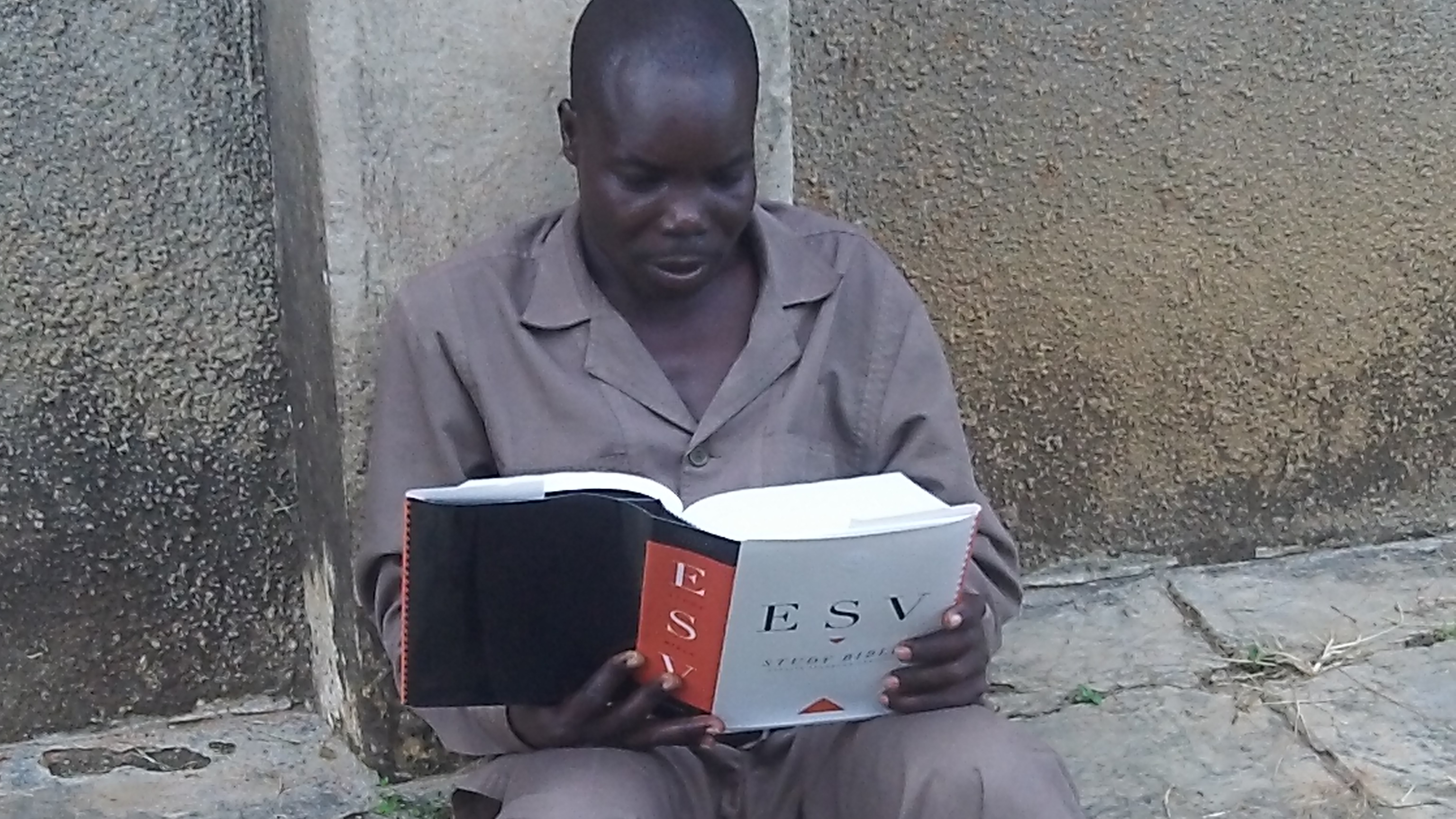
* We now have over 1,100 Global Study Bibles ready to be shipped out in our container. Our plan is to show pastors, evangelists, church leaders and church planters how to use them during our retreats and outreach conferences. The fruit from these Bibles and other things in the container are immeasurable!  Blessed be the Name of the Lord! You can view the list of things which are being put into the container here. The container has a long and arduous trip to get to us.To buy the container, insure it, and ship it from Seguin Texas to RAU is $20,000. A couple is willing match up to $10,000 to get this “ark” to us. Please help if you can. Specifically notate that your donation is  to go towards the container costs.
We are here,Lord willing, long term. We strongly believe that an integral part of discipleship is relationship. I have actively been working on that since 2007 but always knew that short term trips were not the answer for us.Relationship involves, not only “quality” time, but also “quantity” time. In this regard Carol and I had our first Ma’di language lesson on the the 1st. Maggie, Pastor Abraham’s wife, is our instructor. Along with lessons we, of course, will have time to practice with others all day long. One of the things which is difficult for me (and there are many ) is the tonality of the Ma’di language. There are no real written helps either. Maggie is hand writing flashcards and copying a few primary school readers for us. There are none to purchase. There is a Ma’di New Testament but the Old Testament has not been translated. Please pray for us in this and becoming familiar with the culture.

Please also pray that the Lord will continue to give grace at those times when we begin to think about our family and friends. Those times are the hardest for both Carol and me.

Pray over the needs, give as the Lord leads. We appreciate all that everyone does in praying, loving, supporting and giving! Thank you!

Pressing on for Jesus!

Connect with us at Facebook: www.facebook.com/ReachingAfricasUnreached

Make Disciples…!

The primary goal of Reaching Africa’s Unreached  is to come alongside the church in North Uganda, South Sudan, Northeastern D.R. Congo, and Lord willing at some point even regions north of these countries in “making disciples”. I appreciate and concur with Matt Capps’ understanding of discipleship. As J.I. Packer notes:

“Discipleship involves “grounding and growing God’s people in the gospel and its implications for doctrine, devotion, duty, and delight”

Pray with us that we will be faithful in “making disciples”!

——————-

Make Disciples…

One of the purposes of Cross is to encourage people to obey Christ’s call to make disciples of all nations, even the most difficult places. However, as we seek to make disciples, we need to be clear on what discipleship is. Eric Geiger’s interview with Matt Capps addresses this very issue.

 ————————————–

Discipleship is such a broad term, often a junk-drawer term that has been used to describe many things. How do you define it?

The term discipleship is somewhat convoluted in today’s church. I’ve seen churches call everything from bible classes, financial courses, theology groups, marriage seminars, and speculative classes on the end times, ‘discipleship’. Certainly, discipleship involves having a biblical understanding of every aspect of life. However, calling everything done under the auspices of the local church ‘discipleship’ is unhelpful at best. When Jesus called the twelve to make disciples, baptize them, and teach them to observe all he commanded them, I doubt he had in mind what most churches call discipleship today. (see Matthew 28:19-20)

The word translated ‘disciple’ in the New Testament communicates the idea of a ‘learner’. A Christian disciple is one who learns the good news of the gospel and applies it to all of life. If you read through all that Jesus commanded the disciples you will find both gospel proclamation and kingdom demonstration. That is, teaching on the Scriptures and application of those teachings. Discipleship should be gospel-centered, word focused, and mission oriented. So, what is discipleship? To use the words of J.I. Packer, discipleship involves “grounding and growing God’s people in the gospel and its implications for doctrine, devotion, duty, and delight” (Grounded in the Gospel, 29). Discipleship is the intentional passing on of the biblical faith.

Moreover, disciples are not merely learners but fruit-bearing disciple-makers; they multiply themselves. (Acts 20:26-35; 2 Timothy 2:2) Those who follow Jesus are called and charged to be people who, having themselves learned, now reach out to teach what they have learned. This involves both formal and informal discipleship. Formal discipleship would include bible teaching and doctrinal instruction, what the church once called catechesis. (Jeremiah 6:16; Galatians 6:6) While informal discipleship would be intentional gospel centered encouragement and accountability in more intimate relationships. (Deuteronomy 6:6-7)


In terms of discipling new believers, what is of chief importance?

A new believer needs to understand the gospel first and foremost. What is the good news, what does it means for me, and why does it matter? And honestly, this process of understanding and applying the gospel will last a lifetime. So, of central importance is grasping the gospel. The initial steps of discipleship with a new believer might be more informal, almost like craftsmanship. It takes time, energy, patience, and skill to walk a new believer through the gospel and its implications, applying it to every area of life.

At the same time, I also think that new believers need to be involved in the formal process of discipleship, again, it used to be called catechesis. While the modern church rarely uses the word catechesis, we often engaged in catechesis training, which is simply doctrinal instruction. This involves spiritual, moral, and theological foundations that can help mature a young believer. Many old Saints from church history have argued that a faithful catechesis was absolutely essential to the healthy continuance of Christ’s church. In pastoral ministry I gave much thought to teaching the essentials of the Christian faith for the maturity of the body. Out of this time of study I developed five courses designed to be taught and discussed in both formal and informal settings.

  • Gospel – The gospel in its simplicity and depth.
  • Story – The story of redemption of which the gospel is the climax. (Biblical Theology)
  • Theology – The doctrines of the faith that conform to the gospel. (Systematic Theology)
  • Community – The power in the gospel that flows from our relationship with God and to others. (Ecclesiology and Biblical Counseling)
  • Mission – The manner of living that conforms to the truth of the gospel. (Missions, Missional Living, Ethics, and Culture)

These courses charted out with an end goal in mind, as not to perpetuate the continual learner but to train and equip every person for fruitful personal ministry. The end aim of these courses is to fully equip our people with essential theological understanding so that they can minister with discernment within their spheres of influence. I wrote and taught these classes with the new believer in mind. The initial question that set everything into motion was, what are the essential things I want every member of this church to believe and understand? After several semesters of teaching the courses, it was encouraging to see other church members who had completed the courses teaching them alongside me and the other pastors.


When thinking or training on discipleship, what passages are anchor passages for you? 

The Apostle Paul charged the leaders in the Ephesian church to “equip the saints for the work of ministry, for building up the body of Christ, until we all attain to the unity of the faith and of the knowledge of the Son of God, to mature manhood” (4:12). God has gifted His church with pastors, elders, and leaders with various gifts who are called to equip the church body to do the work of ministry (Ephesians 4:11). Notice Paul’s words, equip the saints for ministry.

Too often pastors operate as if they are the only ones capable of ministry. This has been called the professionalization of the ministry. However, it seems that Paul had a different ministry philosophy in mind. I think Michael Green captures this idea in his classic work Evangelism in the Early Church:

“It would be a gross mistake to suppose that the apostles sat down and worked out a plan of campaign: the spread of Christianity was, as we have seen, largely accomplished by informal missionaries, and must have been to a large extent haphazard and spontaneous.”

In other words, ministry was the prerogative of every church member. The ordinary people of the Church saw it as their prerogative. In fact, if one studies church history they will see that Christianity has been supremely a lay movement, spread by informal missionaries. As Green said, “The spontaneous outreach of the total Christian community gave immense [momentum] to the movement from the very outset.”

One of the keys of a multiplying discipleship ministry is intentionality in both informal relationships and formal training structures. All Christians have spiritual gifts that are to be used in ministering to others (1 Cor. 12:7, 11; 1 Pet. 4:10). All training and discipleship should be aimed at these ends, gospel proclamation and kingdom demonstration. In becoming a Christian, each one of us becomes a disciple. As Christians we never stop being disciples. We never reach the point where we no longer require daily discipleship by the gospel word and the gospel community. Moreover, as Christians, we are all called to make disciples

One week plus in Africa

Downtown Kampala
Downtown Kampala

Carol and I have now been in Africa for over a week. Thank you for all your prayers and support. We are blessed to have your prayers, friendship, encouragement, and support!

Boda Boda travel has been our main mode of transport in Kampala

Our children and their spouses, Joshua, Rebecca, Josiah, Anna, and Kenny blessed Carol and me by sending short notes placed in “treasure boxes” to read and candies to eat. They included remembrances during childhood and encouragements. Carol and I at times laughed; at other times tears fell. Our lives have been so blessed and full of love! We have been able to Skype a few times this week. I am grateful for technology but it doesn’t replace hugs and playing with the grand kids. Pray for Carol and me in this as we miss our family very much.

It was an honor to preach in Patrick’s church, First Presbyterian Kampala, on Sunday the 14th. I have  preached there many times since my first trip to Uganda in ’06.  I have many good friends at First Presbyterian.  This church has been faithfully preaching the gospel since the late ’70’s, Idi Amin’s time. At the end of the service the congregation prayed for Carol and me. We are very grateful for this family of faith!

It is especially nice to be here with Carol. I have come so many times without her. On July 10th we celebrated 32 years of marriage here in Uganda. My oh my how the time has flown, the Lord was so good and gracious to me by placing her beside me! I am so grateful for her! Most of our first year of marriage was spent in India as missionaries and now 32 years later we hope to pour out the rest of lives for our King primarily in North Uganda, South Sudan, and Northeastern D.R. Congo. God has given her much grace to put up with me and walk together in the calling He has given us together as a couple. May the Lord give us many more years together in His service!

We turned in our passports today to get our 3 year work permits and should have them returned soon. Please pray God’s hand of favor to be with us with the government officials. We spent much of our first week  getting things for the RAU Guesthouse/Hall of Tyrannus and our new home. We have bought  things to get water flowing inside the Guesthouse, solar panels and accessories, household items etc. Please pray for continuing provision as money has been flowing quickly through our fingers getting these provisions. Please help if you can. We should be heading north to  RAU sometime this week.

RAU Guesthouse/Hall of Tyrannus


Some more money  has come in for the 1999 Land Cruiser we are hoping to purchase. Please pray with us that we can get the remaining funds soon so that we can order it and begin using it for ministry.
Thank you for all your prayers and support!

This is one of notes Joshua, our son, left in my “treasure box”:

“The way of the warrior is the resolute acceptance of death” (Mariko Yashida) and “As long as I can spend my life for Christ I care not whether I am eaten by cannibals or by worms” (John Patton).


May we all as Christians be so resolute in following our Lord and King—Jesus!

The article below written by Tim Challies brought me great encouragement as I read it. May it encourage you as well as you press on to honor King Jesus!

———-


The Bible tells me I am to store up treasures in heaven. It tells me there are eternal rewards for decisions I make in this life and it tells me I should desire these rewards and act accordingly. And yet sometimes I feel the desire for reward is a sign of spiritual weakness rather than strength, like that is for lesser Christians and that I should grow beyond it. I struggle with the idea that I am to be motivated to obey God in this world by the promise of reward in the next. It has always struck me as wrong, as something a little bit less than noble, that I would obey God not purely and solely out of a desire to obey him, but out of a desire to increase my eternal reward. Have you ever wondered about that?

Is it wrong to be motivated by rewards? Somehow in my mind it seems like the reward must negate the joy or the purity of obedience, and especially when it comes to the way I handle money. Shouldn’t I want to give out of the joy of obedience? Shouldn’t I want to give simply because I love the God who commands me to give generously?

Randy Alcorn has helped me as I’ve pondered this. In his book Managing God’s Money, he refers to God granting eternal rewards for faithful obedience “the neglected key to unlocking our motivation” and digs up plenty of biblical proof that our Bible heroes were motivated by this kind of reward. He offers Hebrews 11:26 as a simple example: “He [Moses] considered the reproach of Christ greater wealth than the treasures of Egypt, for he was looking to the reward.” And, of course, we know that the Apostle Paul was also running with his eye on the prize—the crown that would last forever (1 Corinthians 9:25). Both men were doing the obedient thing on earth with a view to eternal reward.

Even Christ endured the cross “for the joy that was set before him” (Hebrews 12:2). He humbled himself knowing that he would soon be exalted. He, too, found his motivation in the eternal reward that would await him—in this case the glory of his Father as he is worshiped by a church washed and redeemed. This challenged me. If I maintain that it is wrong to be motivated by rewards, I am bringing an accusation against Christ, suggesting that he was wrongly motivated. And I bring that same accusation against Paul and Moses and others.

Having made the argument from Scripture, Alcorn makes the argument from human experience, pointing out that in other areas of life we are routinely motivated by reward. This is true in home, school and business. “Every effective manager and every wise leader knows the importance of incentives. These are motivators that may be personal, social, spiritual, physical, or financial. Unfortunately, countless Christians consider incentives to be ‘secular,’ ‘carnal,’ or ‘unspiritual.’” We even use rewards to motivate our own children; so why should we be surprised that God uses rewards to motivate his children? Says Alcorn,

To say “I don’t do anything for the reward—I do it only because it’s right,” may appear to take the spiritual high ground. But, in fact, it’s pseudospiritual. Saying that there’s only one good reason to do something denies the other ways God himself uses to motivate us. It contradicts all the passages of Scripture that unmistakably attempt to motivate us by our desire for rewards.

This is convicting! I may feel like I am taking the moral high ground when I say, “I do it only it because it’s right,” but that is actually pride talking. It is pride telling me that I know better than God.

Whose idea is it to grant rewards to faithful stewards? Alcorn offers a metaphor. Suppose that I offer my son a reward if he spends his whole Saturday working outside with me. “Put in a day’s work and I’ll pay you $50 and take you out for dinner.” Is it wrong for my son to now desire the reward I have offered him? Of course not! That’s one side of the metaphor. Here is the other: As a father, I want my son to desire this reward. I want him to want it, and I want him to have it. It will be my joy to give it to him. I even want it to motivate him to joyful work based on joyful expectation. It would be wrong of my son to demand a reward for obedience, but it is not wrong for him to desire one if I have offered it.

In the same way, it is God’s idea that there should be this close relationship between obedience and reward. God designed me and all of us in such a way that we are motivated by incentive. It’s who we are. This gives me the joy and freedom of doing the right thing because it is the right thing and because I will receive God’s reward. The two are complementary, not in conflict.

The fact is, God does not have to reward me for what I do. Instead, he chooses to and delights to. At the end of the long day’s work, it is my joy to hand my son his reward and to take him out to dinner. At the end of the long day’s work, he honors me by accepting the reward I offer him. Why should I grant God any less?

1999 Land Cruiser Found

1999 Landcruiser Update August 1, 2013: The funds have been graciously supplied and this vehicle is on its way to us. Thank you Lord!

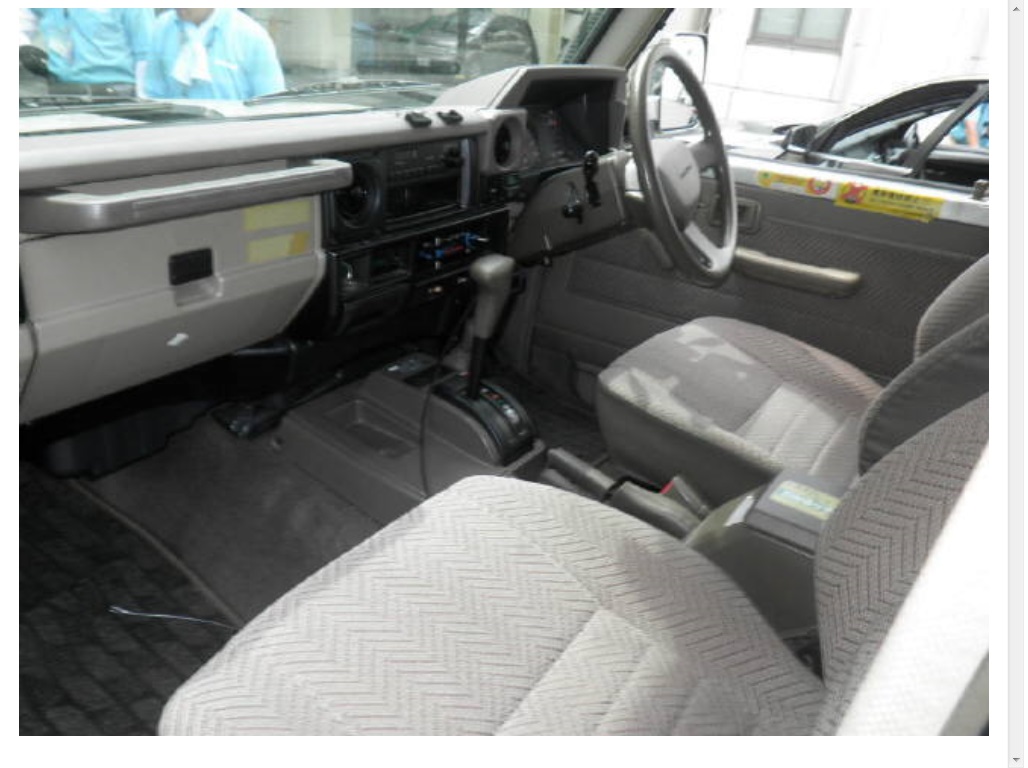
Co-worker Patrick’s car man has found this Diesel LX long 4WD 1999 Land Cruiser (Model:KC-HZJ77V) in Japan. Buying a used vehicle in Uganda or South Sudan, unless from a person one knows well and trusts, is not advisable. This Cruiser has 145620km (about 90,000 miles),4200cc, and in very good condition for $15,000 to Mombasa. It would take another $6,000+- to transport it into Uganda, pay taxes, and make it bush ready (snorkel, roof rack, brush guards/bumpers,winch… ). The vehicle would be used for gospel and medical outreaches throughout North Uganda, South Sudan, and Northeastern D.R. Congo. We currently have $11,500 for this vehicle or another one like it. Please pray for the rest and consider helping. You may email me at JacobLeeRAU@gmail.com with any questions. Thank you!

“The Least of These”

Let’s get the right doctrine from the right scripture texts!

———————–

“The Least of These”: An Example of the Right Doctrine from the Wrong Text

 by Justin Taylor

In Matthew 24:35-40, Jesus says: “I was hungry and you gave me food, I was thirsty and you gave me drink, I was a stranger and you welcomed me, I was naked and you clothed me, I was sick and you visited me, I was in prison and you came to me.’ Then the righteous will answer him, saying, ‘Lord, when did we see you hungry and feed you, or thirsty and give you drink? And when did we see you a stranger and welcome you, or naked and clothe you? And when did we see you sick or in prison and visit you?’ And the King will answer them, ’Truly, I say to you, as you did it to one of the least of these my brothers, you did it to me.’”

Craig Blomberg comments:

The majority perspective has understand Jesus’ ‘brothers’ in verse 40 to refer to spiritual kin, as the term (adelphoi) does elsewhere in Matthew in every instance in which biological siblings are not in view (see 5:22-24, 47; 7:3-5; 12:48-50; 18:15 twice, 21, 35; 23:8; 28:10).

The term ‘little ones’, of which ‘the least’ (25:40, 45) is the superlative form, also without exception in Matthew refers to disciples (10:42; 18:6, 10, 14; cf. also 5:19 and 11:11).

This makes the point of Jesus’ teaching closely parallel to Matthew 10:42: Jesus’ itinerant followers (today we might call them Christian missionaries) must be cared for by those to whom they minister. Affording material help to those who preach in the name of Jesus demonstrates acceptance of the missionaries’ message at the spiritual level . . . This view is almost certainly correct.

Today, however, the prevailing interpretation is that Jesus is teaching about the need to help the dispossessed whether or not they are Christian. . . .

This is obviously an important biblical theme, but is far less likely to be the focus of this particular passage, given the consistent meaning of the terms and the larger context of parables focusing on the disciples (24:43-25:46).

—Craig L. Blomberg, Neither Poverty nor Riches: A Biblical Theology of Material Possessions, New Studies in Biblical Theology, ed. D. A. Carson (Downers Grove, IL: IVP, 2000), 126; my emphasis.