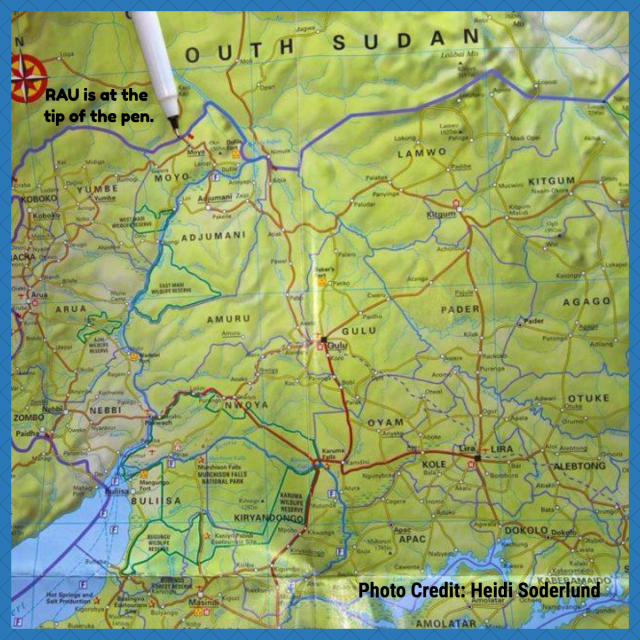
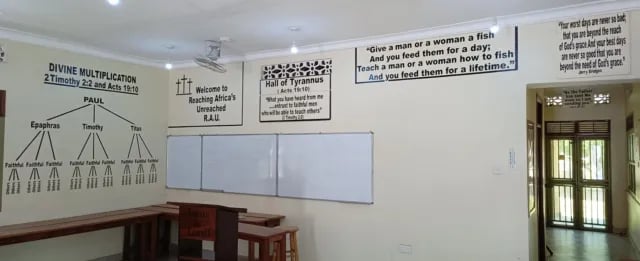
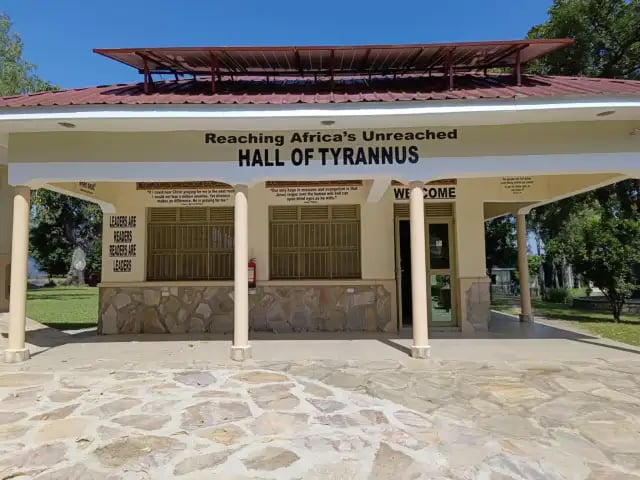
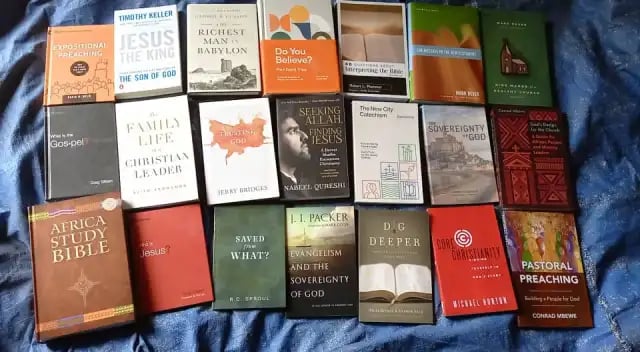
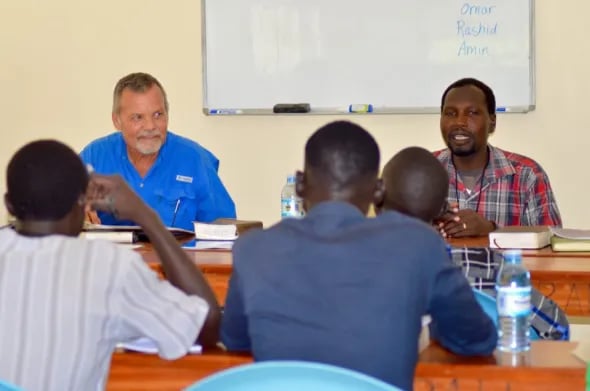
The primary goal of Reaching Africa’s Unreached is to come alongside the church in North Uganda, South Sudan, Northeastern D.R. Congo, and Lord willing at some point even regions north of these countries in “making disciples”. I appreciate and concur with Matt Capps’ understanding of discipleship. As J.I. Packer notes:
“Discipleship involves “grounding and growing God’s people in the gospel and its implications for doctrine, devotion, duty, and delight”
Pray with us that we will be faithful in “making disciples”!
——————-
Make Disciples…
One of the purposes of Cross is to encourage people to obey Christ’s call to make disciples of all nations, even the most difficult places. However, as we seek to make disciples, we need to be clear on what discipleship is. Eric Geiger’s interview with Matt Capps addresses this very issue.
Discipleship is such a broad term, often a junk-drawer term that has been used to describe many things. How do you define it?
The term discipleship is somewhat convoluted in today’s church. I’ve seen churches call everything from bible classes, financial courses, theology groups, marriage seminars, and speculative classes on the end times, ‘discipleship’. Certainly, discipleship involves having a biblical understanding of every aspect of life. However, calling everything done under the auspices of the local church ‘discipleship’ is unhelpful at best. When Jesus called the twelve to make disciples, baptize them, and teach them to observe all he commanded them, I doubt he had in mind what most churches call discipleship today. (see Matthew 28:19-20)
The word translated ‘disciple’ in the New Testament communicates the idea of a ‘learner’. A Christian disciple is one who learns the good news of the gospel and applies it to all of life. If you read through all that Jesus commanded the disciples you will find both gospel proclamation and kingdom demonstration. That is, teaching on the Scriptures and application of those teachings. Discipleship should be gospel-centered, word focused, and mission oriented. So, what is discipleship? To use the words of J.I. Packer, discipleship involves “grounding and growing God’s people in the gospel and its implications for doctrine, devotion, duty, and delight” (Grounded in the Gospel, 29). Discipleship is the intentional passing on of the biblical faith.
Moreover, disciples are not merely learners but fruit-bearing disciple-makers; they multiply themselves. (Acts 20:26-35; 2 Timothy 2:2) Those who follow Jesus are called and charged to be people who, having themselves learned, now reach out to teach what they have learned. This involves both formal and informal discipleship. Formal discipleship would include bible teaching and doctrinal instruction, what the church once called catechesis. (Jeremiah 6:16; Galatians 6:6) While informal discipleship would be intentional gospel centered encouragement and accountability in more intimate relationships. (Deuteronomy 6:6-7)
In terms of discipling new believers, what is of chief importance?
A new believer needs to understand the gospel first and foremost. What is the good news, what does it means for me, and why does it matter? And honestly, this process of understanding and applying the gospel will last a lifetime. So, of central importance is grasping the gospel. The initial steps of discipleship with a new believer might be more informal, almost like craftsmanship. It takes time, energy, patience, and skill to walk a new believer through the gospel and its implications, applying it to every area of life.
At the same time, I also think that new believers need to be involved in the formal process of discipleship, again, it used to be called catechesis. While the modern church rarely uses the word catechesis, we often engaged in catechesis training, which is simply doctrinal instruction. This involves spiritual, moral, and theological foundations that can help mature a young believer. Many old Saints from church history have argued that a faithful catechesis was absolutely essential to the healthy continuance of Christ’s church. In pastoral ministry I gave much thought to teaching the essentials of the Christian faith for the maturity of the body. Out of this time of study I developed five courses designed to be taught and discussed in both formal and informal settings.
- Gospel – The gospel in its simplicity and depth.
- Story – The story of redemption of which the gospel is the climax. (Biblical Theology)
- Theology – The doctrines of the faith that conform to the gospel. (Systematic Theology)
- Community – The power in the gospel that flows from our relationship with God and to others. (Ecclesiology and Biblical Counseling)
- Mission – The manner of living that conforms to the truth of the gospel. (Missions, Missional Living, Ethics, and Culture)
These courses charted out with an end goal in mind, as not to perpetuate the continual learner but to train and equip every person for fruitful personal ministry. The end aim of these courses is to fully equip our people with essential theological understanding so that they can minister with discernment within their spheres of influence. I wrote and taught these classes with the new believer in mind. The initial question that set everything into motion was, what are the essential things I want every member of this church to believe and understand? After several semesters of teaching the courses, it was encouraging to see other church members who had completed the courses teaching them alongside me and the other pastors.
When thinking or training on discipleship, what passages are anchor passages for you?
The Apostle Paul charged the leaders in the Ephesian church to “equip the saints for the work of ministry, for building up the body of Christ, until we all attain to the unity of the faith and of the knowledge of the Son of God, to mature manhood” (4:12). God has gifted His church with pastors, elders, and leaders with various gifts who are called to equip the church body to do the work of ministry (Ephesians 4:11). Notice Paul’s words, equip the saints for ministry.
Too often pastors operate as if they are the only ones capable of ministry. This has been called the professionalization of the ministry. However, it seems that Paul had a different ministry philosophy in mind. I think Michael Green captures this idea in his classic work Evangelism in the Early Church:
“It would be a gross mistake to suppose that the apostles sat down and worked out a plan of campaign: the spread of Christianity was, as we have seen, largely accomplished by informal missionaries, and must have been to a large extent haphazard and spontaneous.”
In other words, ministry was the prerogative of every church member. The ordinary people of the Church saw it as their prerogative. In fact, if one studies church history they will see that Christianity has been supremely a lay movement, spread by informal missionaries. As Green said, “The spontaneous outreach of the total Christian community gave immense [momentum] to the movement from the very outset.”
One of the keys of a multiplying discipleship ministry is intentionality in both informal relationships and formal training structures. All Christians have spiritual gifts that are to be used in ministering to others (1 Cor. 12:7, 11; 1 Pet. 4:10). All training and discipleship should be aimed at these ends, gospel proclamation and kingdom demonstration. In becoming a Christian, each one of us becomes a disciple. As Christians we never stop being disciples. We never reach the point where we no longer require daily discipleship by the gospel word and the gospel community. Moreover, as Christians, we are all called to make disciples